- Tên khác: 異世界から戻ってきたら、私を愛する貴公子様が闇堕ちしていました, When I Returned From Another World, I Found That The Nobleman Who Loved Me Had Fallen Into Darkness, Khi Trở Về Từ Dị Giới, Tôi Phát Hiện Quý Tộc Yêu Tôi Đã Hắc Hóa, 異世界から帰還したら、私を愛してくれた貴族が闇堕ちしていた
- Tác giả: 異世界から戻ってきたら、私を愛する貴公子様が闇堕ちしていました
- Nhóm Dịch: Jellycomics ©
- Thể loại: Doujinshi, Drama, Isekai, JELLYCOMICS ©, Josei(W), MANGA, Oneshot, RAW, Royal family, Smut, Supernatural, 🇯🇵
- Thẻ: dark romance manga, isekai romance, Josei smut manga, obsessive nobleman story, psychological drama, royal intrigue manga, trauma romance
- Trạng thái: OnGoing
- Ngày thêm: 01/10/2026
- Tổng lượt xem: 18
When I Returned From Another World, I Found That The Nobleman Who Loved Me Had Fallen Into Darkness belongs to the genre 🇯🇵, 🇯🇵, Doujinshi,, Doujinshi, Manga,, Manga, Oneshot,, Oneshot, Josei(W),, Josei(W), Adult,, Adult, Smut,, Smut, Drama,, Drama, Fantasy,, Fantasy, Isekai,, Isekai, Romance,, Romance, Royal family,, Royal family, Supernatural, Supernatural by author 異世界から戻ってきたら、私を愛する貴公子様が闇堕ちしていました is a manga series that has garnered significant attention. The following article provides a detailed overview of the plot, setting, and why When I Returned From Another World, I Found That The Nobleman Who Loved Me Had Fallen Into Darkness is worth adding to your reading list.
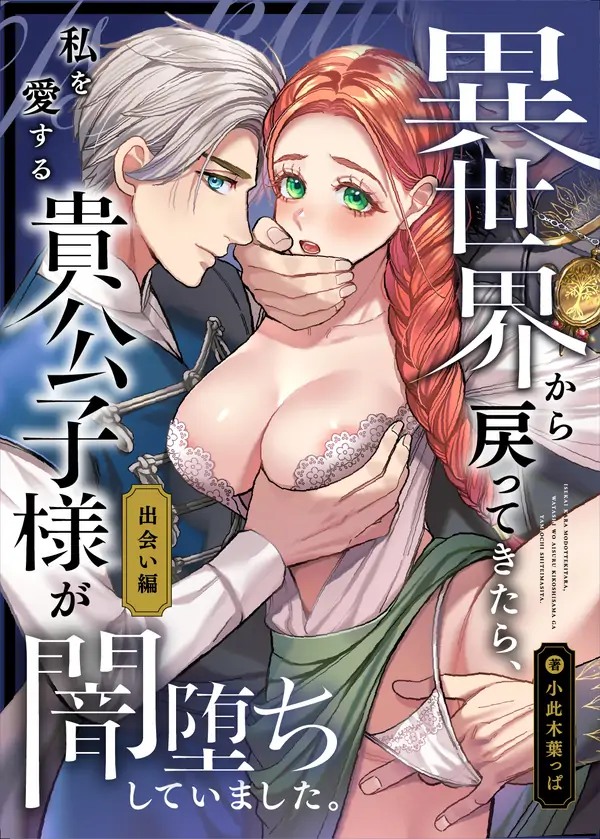
When I Returned From Another World, I Found That The Nobleman Who Loved Me Had Fallen Into Darkness – Main Plot and Review
Dive into "When I Returned From Another World, I Found That The Nobleman Who Loved Me Had Fallen Into Darkness" – a josei smut drama of love, trauma, and royal intrigue.
|||
# A Descent into Obsession: Unpacking the Dark Allure of When I Returned From Another World, I Found That The Nobleman Who Loved Me Had Fallen Into Darkness
Welcome, esteemed readers and fellow aficionados of the profound and provocative, to JellyComics' premier "Deep Dive Review" series. I'm your host, a Lead Comic Critic utterly absorbed in the intricate tapestries of serialized art and narrative. Today, we embark on an ambitious, perhaps even perilous, journey into the heart of a comic that has seized the imagination of countless readers and ignited fervent discussions across the josei landscape: *When I Returned From Another World, I Found That The Nobleman Who Loved Me Had Fallen Into Darkness*. This isn't merely a title; it's a promise, a premonition of the emotional maelstrom that awaits within its pages. Prepare yourselves, for we shall dissect every sinew, every shade, every whispered secret of this truly compelling work.
## Introduction: The Phenomenon of When I Returned From Another World, I Found That The Nobleman Who Loved Me Had Fallen Into Darkness
The realm of **doujinshi manga** is a vibrant ecosystem, constantly evolving, pushing boundaries, and giving voice to narratives that mainstream publications might shy away from. *When I Returned From Another World, I Found That The Nobleman Who Loved Me Had Fallen Into Darkness* stands as a shining, albeit darkly gleaming, example of this creative freedom. It's a **oneshot** that leaves an indelible mark, a concise yet profoundly impactful exploration of love, loss, and the consuming power of obsession. The very premise—a return from an **isekai** experience only to find a beloved figure irrevocably changed, shrouded in a new and dangerous allure—is a masterstroke of dramatic tension.
From its initial splash, this **Josei(W)** title immediately signals its intent to cater to a mature audience, daring to tread where many do not. It’s an **adult manga** that doesn't shy away from the complexities of human desire, emotional wreckage, and the often-blurred lines between adoration and possessiveness. The genre tags alone paint a vivid picture: **smut, drama, fantasy, isekai, romance, royal family, supernatural**. Each tag acts as a narrative breadcrumb, guiding us deeper into a story that defies easy categorization, weaving together elements usually disparate into a cohesive and utterly captivating whole. This isn't just a romance; it's a psychological exploration framed within a fantastical setting, delving into themes of trauma, sacrifice, and the often-darker facets of passion.
The central conceit of *When I Returned From Another World, I Found That The Nobleman Who Loved Me Had Fallen Into Darkness* resonates profoundly with contemporary audiences increasingly drawn to narratives that explore moral ambiguity and the darker side of human nature. It taps into a primal fear: the fear of returning home to find everything changed, especially the people we hold dearest. But it also taps into a powerful fantasy: the allure of a love so fierce it borders on the dangerous, a devotion so absolute it becomes overwhelming. The "darkness" isn't merely a superficial character trait; it's an existential shift, promising a narrative rich with conflict, both internal and external. The use of the Japanese title, *異世界から戻ってきたら、私を愛する貴公子様が闇堕ちしていました*, further emphasizes the specific cultural resonance of the "dark fall" trope, a concept deeply ingrained in Japanese storytelling. This **BG romance manga** transcends typical tropes by injecting a profound sense of psychological depth and a pervasive atmosphere of unease and longing.
## In-Depth Plot Analysis & World Building of When I Returned From Another World, I Found That The Nobleman Who Loved Me Had Fallen Into Darkness
The narrative of *When I Returned From Another World, I Found That The Nobleman Who Loved Me Had Fallen Into Darkness* unfolds with a deliberate, almost poetic cadence, each panel meticulously crafted to build tension and deepen the emotional resonance. We are introduced to Nati, our protagonist, a figure of profound grace and wisdom, entrusted with the weighty responsibility of guiding the young lord, Cyrus. Her role is not merely that of a tutor, but of a moral compass, a beacon of understanding for a soul still navigating the turbulent waters of youth and burgeoning responsibility.
Cyrus, initially portrayed as a remarkably naive and sheltered young man, bears the heavy burden of early parental loss. This tragic backstory is crucial; it establishes a foundational vulnerability that Nati, in her compassionate role, seeks to mend. She steps into a multifaceted void in his life, offering guidance, solace, and a maternal, almost sisterly, warmth that he has never known. Their relationship blossoms organically, a delicate dance of mentorship and nascent affection, devoid of explicit romantic overtones but brimming with a profound, almost spiritual, connection. Nati, the "guide of the Light of Knowledge," genuinely endeavors to imbue Cyrus with wisdom and morality, preparing him for a future that she believes will be bright and just.
The world they inhabit, though only glimpsed through the lens of a **oneshot**, is subtly painted with strokes of royal grandeur and ancient tradition. The implication of a structured societal hierarchy, a lineage, and the inherent duties of a nobleman like Cyrus, creates a rich backdrop. This isn't just a generic fantasy setting; it's a realm where titles and responsibilities carry significant weight, and where the actions of individuals, especially those within the **royal family**, can reverberate through the entire kingdom. The magic system, though largely understated, hints at a subtle **supernatural** undercurrent, perhaps the very fabric that allowed Nati's unexpected journey to another world, or the conduit through which Cyrus's "darkness" truly manifested.
Then comes the pivotal, world-shattering event: Nati's abrupt, unexplained departure into an **isekai**. This is not a journey she chose, but one imposed upon her by forces unknown, ripping her from the life she knew and, more importantly, from Cyrus, whom she had so carefully nurtured. While the specifics of her time in this "other world" are intentionally vague, serving more as a plot device than a detailed exposition, the impact of her absence on Cyrus is monumental. For him, her sudden disappearance would have been a traumatic rupture, reopening the wounds of parental loss and compounding them with an acute sense of abandonment and betrayal. It is within this crucible of grief and isolation that the seeds of his "darkness" are sown, watered by longing and despair.
Nati's eventual return is the true catalyst for the **drama** that unfolds in *When I Returned From Another World, I Found That The Nobleman Who Loved Me Had Fallen Into Darkness*. She expects to find the same gentle, naive young man she left behind, perhaps a little older, a little wiser, but fundamentally unchanged in his innocence. What she discovers instead is a profound transformation, a chasm separating the Cyrus she knew from the man who now stands before her. The **nobleman who loved me had fallen into darkness** is not a hyperbolic statement; it is a literal description of his metamorphosis. This "darkness" manifests not just as a shift in personality, but as an almost palpable aura, a brooding intensity that permeates his every glance, every gesture. His initial naive infatuation has twisted into a consuming, almost terrifying passion, fueled by years of silent suffering and a desperate fear of losing her again.
His "fall" is meticulously detailed, even within the confines of a **oneshot doujinshi**. It’s implied to be a slow, agonizing process, a corrosion of his former self, perhaps even tinged with **supernatural** influences that capitalized on his vulnerability. We see hints of a possessiveness that verges on the obsessive, a gaze that no longer holds simple affection but a deep-seated, desperate claim. His actions, though stemming from a place of intense love, now carry an undercurrent of control and desperation. The innocent love Nati fostered has become a monstrous bloom, beautiful yet perilous. The narrative expertly navigates the fine line between romantic intensity and psychological manipulation, challenging the reader to question the nature of true love and whether it can exist amidst such profound transformation.
The world-building, though sparse, effectively supports this narrative shift. The "royal family" setting provides a context for Cyrus's power and influence, making his dark transformation all the more unsettling. His newfound intensity, combined with his inherent authority, creates a dangerous dynamic for Nati. She is no longer merely his guide; she is the object of his overwhelming, altered affections, trapped in a gilded cage of his devotion. This detailed set-up allows the subsequent **smut** elements to carry significant emotional weight, as they are not merely gratuitous but serve to illustrate the raw, untamed nature of Cyrus's love and Nati's complex reactions to it. The entire premise of *When I Returned From Another World, I Found That The Nobleman Who Loved Me Had Fallen Into Darkness* hinges on this profound reversal, forcing Nati—and the reader—to confront the unsettling truth that love, when left untended and twisted by circumstance, can become a force of darkness unto itself.
## Comprehensive Character Study
The heart of any compelling **manga** lies in its characters, and *When I Returned From Another World, I Found That The Nobleman Who Loved Me Had Fallen Into Darkness* excels in crafting deeply intricate, psychologically nuanced individuals, especially considering its **oneshot** format. The narrative, though brief, manages to etch their personas into the reader's mind with remarkable clarity.
### Protagonist Analysis: Nati
Nati is not merely a central figure; she is the emotional anchor and the moral compass around which this turbulent story revolves. Her initial portrayal is one of pure, unwavering dedication. As the "guide of the Light of Knowledge," she embodies wisdom, patience, and an almost selfless devotion to Cyrus's upbringing. She approaches her duties with a nurturing spirit, seeing Cyrus not just as a charge but as a vulnerable soul in need of genuine care. Her interactions with the young Cyrus are characterized by a gentle firmness, an older sister's protectiveness blended with a mother's boundless affection. This establishes her as someone deeply empathetic and capable of forming profound emotional bonds.
Her journey to the "other world"—the **isekai** element—is a trauma in itself, an involuntary severance from her reality. We can infer the struggles she faced, the adaptations she made, the sheer will required to survive and eventually return. This experience undoubtedly hardens her, instilling a deeper resilience, but also leaving her with a lingering sense of displacement and perhaps even a form of survivor's guilt. The shock of her return is compounded by the revelation of Cyrus's transformation. The gentle, naive boy she left behind is gone, replaced by a man consumed by an unsettling "darkness."
Nati's psychological response to this transformation is complex and multi-layered, forming the core of her character arc in *When I Returned From Another World, I Found That The Nobleman Who Loved Me Had Fallen Into Darkness*. She is confronted with a profound moral dilemma: how does one reconcile a past love with a present, darker manifestation of that love? Her trauma from the other world, coupled with the emotional whiplash of Cyrus's state, forces her into a deeply introspective state. She grapples with fear, certainly, as Cyrus's possessiveness verges on the dangerous. But beneath the fear, there’s also a flicker of the old affection, a yearning for the boy she nurtured, and perhaps even a strange, unsettling attraction to the intensity of his "dark" devotion. This internal conflict is exquisitely rendered, showcasing her emotional intelligence and her refusal to simply demonize him. She seeks to understand, to peel back the layers of his new persona, hoping to find a remnant of the light she once knew. Her growth arc is about reclaiming her own agency amidst overwhelming passion, learning to navigate the perilous landscape of transformed love, and ultimately, deciding if such a love, however dark, can still be salvaged or if it must be escaped. Her strength lies not in physical prowess, but in her unyielding emotional resilience and her capacity for profound, albeit complicated, empathy.
### Antagonist/Side Character Analysis: Cyrus
Cyrus is a character of immense complexity, a tragic figure whose "fall into darkness" is both a consequence of circumstance and an intensely personal transformation. Initially, he is defined by his innocence, his naivety, and his profound need for connection, a direct result of his early bereavement. Nati filled this void, becoming the central pillar of his emotional world. Her sudden disappearance, therefore, would have been nothing short of catastrophic. It wasn't just a physical absence; it was the loss of his guide, his confidante, his surrogate family—the complete collapse of his emotional infrastructure. This raw, unaddressed grief, coupled with profound loneliness and a desperate yearning for her return, served as the fertile ground for his subsequent "darkness."
His transformation is not a sudden, villainous turn, but a slow, agonizing corruption. This "darkness" is a manifestation of his overwhelming, desperate love for Nati, twisted by abandonment and suffering. It's a possessive, all-consuming force that makes him believe that only by holding onto her, by making her irrevocably his, can he prevent such pain from ever recurring. His eyes, once soft and trusting, now possess a sharp, predatory glint. His gentle demeanor has given way to an intense, almost suffocating presence. He is no longer the innocent boy but a man shaped by profound trauma, his love having mutated into an obsession. The **supernatural** elements hinted at might also play a role, perhaps a pact or an inherited darkness, offering an external justification for his radical change, yet never fully absolving him of his transformed self.
Cyrus functions as an antagonist in the traditional sense, in that his actions create immense conflict and danger for Nati. However, he is also a deeply sympathetic character, a victim of his circumstances and his own overwhelming emotions. His motives, though twisted, originate from a place of profound love and fear. This duality makes him incredibly compelling, challenging the reader to empathize with his suffering even as they are disturbed by his methods. His internal struggle, though largely unspoken, is palpable: the remnants of the gentle boy battling against the consuming darkness that has claimed him. His character in *When I Returned From Another World, I Found That The Nobleman Who Loved Me Had Fallen Into Darkness* embodies the tragic consequences of unchecked emotion and the destructive power of love when it transforms into obsession.
### Relationship Dynamics (Chemistry)
The dynamic between Nati and Cyrus is the throbbing heart of this **BG romance manga**, evolving dramatically from its initial, almost familial bond to a relationship charged with dangerous passion. Their chemistry, initially built on mutual respect and affection, undergoes a shocking metamorphosis. The pre-isekai relationship was one of mentor and student, elder sister and younger brother, albeit with a subtle undercurrent of a deeper, unspoken connection that Nati may have consciously suppressed. Cyrus, in his naivety, already harbored a blossoming, innocent affection, mistaking it perhaps for gratitude or admiration.
Upon Nati's return, this dynamic shatters and reforms into something far more volatile and intense. The "darkness" in Cyrus completely reconfigures their power balance. He is no longer the naive boy looking up to her; he is a powerful nobleman, imbued with an unsettling possessiveness, who now views her not as a guide, but as *his*. The narrative delves deeply into the psychological and emotional complexities of this shift. Nati is caught between her past affection and her present fear, between the memories of the boy she loved and the reality of the man who now desires her so fiercely.
The **smut** elements in *When I Returned From Another World, I Found That The Nobleman Who Loved Me Had Fallen Into Darkness* are not merely for shock value or titillation; they are integral to portraying the raw, untamed nature of Cyrus's transformed love and Nati's complex reactions. These scenes explore themes of consent, agency, and the very real psychological impact of a relationship where love has become intertwined with obsession. The physical intimacy is a battleground, a space where Cyrus attempts to assert his claim and where Nati must navigate her own desires, fears, and the lingering echoes of their shared past. The chemistry is undeniable, a magnetic pull born from deep history and amplified by his overwhelming darkness, yet it is also fraught with peril, making every intimate moment a tightrope walk between passion and psychological danger. It is this intricate, deeply unsettling, yet undeniably compelling dynamic that makes *When I Returned From Another World, I Found That The Nobleman Who Loved Me Had Fallen Into Darkness* such a captivating and unforgettable **josei** experience.
## Artistic Review: The Visual Mastery of When I Returned From Another World, I Found That The Nobleman Who Loved Me Had Fallen Into Darkness
The visual storytelling in *When I Returned From Another World, I Found That The Nobleman Who Loved Me Had Fallen Into Darkness* is nothing short of masterful, especially for a **doujinshi oneshot**. The artist demonstrates a profound understanding of how to convey complex emotions and narrative shifts through meticulous linework, evocative shading, and dynamic panel composition. This isn't just about pretty pictures; it's about art serving as a primary narrative vehicle, enhancing every psychological nuance and every dramatic beat.
The **linework** is exceptionally refined. For Nati, the lines are often delicate and flowing, emphasizing her grace, her initial warmth, and her eventual vulnerability. Her eyes, in particular, are rendered with exquisite detail, capable of conveying a spectrum of emotions from gentle affection to profound shock, fear, and reluctant desire. Conversely, Cyrus’s transformation is starkly highlighted by a shift in line quality. His pre-darkness self would likely have had softer, more innocent lines. Post-isekai, his features become sharper, more angular, and his hair, often falling across his face, is drawn with heavier, more deliberate strokes, hinting at his brooding intensity. The lines around his eyes become more pronounced, giving them a piercing, almost predatory quality that contrasts sharply with their earlier naivety.
**Shading** is employed with breathtaking skill, acting as a powerful tool for mood and characterization. The artist uses intricate cross-hatching and varying densities of black to create a palpable atmosphere of tension and mystery. When Cyrus manifests his "darkness," heavy shadows cling to his form, often obscuring parts of his face, particularly his eyes, lending him an air of enigma and danger. This stark contrast between light and shadow is also used to represent Nati's internal struggle; panels depicting her inner turmoil might feature dramatic lighting, with her face half-submerged in shadow, reflecting her confusion and fear, or bathed in soft light when recalling happier memories. The use of atmospheric shading for backgrounds, hinting at opulent but perhaps desolate royal chambers, further emphasizes the isolating nature of Cyrus's transformed world.
The **panel flow** is remarkably fluid and intuitive, guiding the reader's eye seamlessly through the narrative. The artist expertly transitions from wide, establishing shots of the royal palace to intimate close-ups of characters' faces, amplifying emotional intensity. Moments of heightened **drama** or **smut** are often conveyed through a series of rapid, fragmented panels, creating a sense of urgency and breathless passion, or elongated, detailed panels that slow down time to emphasize a particular gaze, a touch, or a pivotal emotional realization. The visual pacing ensures that the **oneshot** feels neither rushed nor drawn out, delivering its punch with precision.
**Character design** is a standout feature of *When I Returned From Another World, I Found That The Nobleman Who Loved Me Had Fallen Into Darkness*. Nati's elegance is evident in her attire and posture, reflecting her role and refined nature. Her design is classic **josei**, beautiful but relatable, allowing readers to project onto her experiences. Cyrus's transformation is perhaps the most striking visual element. His shift from a gentle youth to a dark, intense figure is brilliantly executed through subtle changes in facial expression, body language, and even his fashion choices, which become more severe or ornate to reflect his altered psyche. His eyes, the windows to his soul, become particularly expressive, conveying a terrifying mix of love, desperation, and possessiveness that is deeply unsettling yet utterly captivating.
Even the **backgrounds**, though sometimes minimal, are never neglected. When present, they are detailed and atmospheric, reinforcing the "royal family" setting and contributing to the overall sense of opulence and confinement. Ornate chandeliers, heavy drapes, and intricate wall patterns all serve to ground the fantastical elements and underscore the characters' positions within this aristocratic world. The art in *When I Returned From Another World, I Found That The Nobleman Who Loved Me Had Fallen Into Darkness* is not just aesthetically pleasing; it is an active participant in the storytelling, a silent narrator that speaks volumes about the characters' inner worlds, the escalating tension, and the dark beauty of their intertwined fates. It ensures that the emotional impact of this **adult manga** resonates long after the final panel.
## Why When I Returned From Another World, I Found That The Nobleman Who Loved Me Had Fallen Into Darkness Stands Out: A Comparative Analysis
In the vast and ever-expanding landscape of **manga**, particularly within the **josei** and **smut** genres, it can be challenging for a **oneshot** to truly distinguish itself. Yet, *When I Returned From Another World, I Found That The Nobleman Who Loved Me Had Fallen Into Darkness* achieves this with remarkable potency, carving out its own unique niche. Its strength lies in its masterful blend of familiar tropes with a deeply unsettling psychological edge, elevating it beyond typical romantic **fantasy** fare.
Many **isekai romance manga**, such as "The Villainess Reverses the Hourglass" or "Who Made Me a Princess," focus on protagonists adapting to a new world or altering their fate within it. *When I Returned From Another World, I Found That The Nobleman Who Loved Me Had Fallen Into Darkness* flips this on its head. The protagonist *returns* from the other world, only to find her *original* world, and specifically her beloved, irrevocably altered. This reversal of the **isekai** premise, where the trauma is not experienced in the new world but inflicted upon the home world in the protagonist's absence, is a truly refreshing and dramatic twist.
Compared to other **adult doujinshi** that feature dark romance or obsessive love, what makes *When I Returned From Another World, I Found That The Nobleman Who Loved Me Had Fallen Into Darkness* unique is the profound character development within such a concise format. Many similar works might rush the "darkness" or present it as purely antagonistic. Here, Cyrus's fall is tragic, rooted in Nati's absence and his own deep-seated trauma. This nuanced portrayal of the "dark" lover as both a threat and a victim of circumstance lends a captivating depth not always seen in **smut drama**. It elevates the **romance** from mere titillation to a complex exploration of unhealthy attachment and the enduring power of a twisted love.
Furthermore, its ability to weave together elements of **royal family** intrigue, **supernatural** hints, and intense **drama** into a coherent and emotionally impactful narrative is exceptional. While other **BG romance manga** might focus on a single aspect, *When I Returned From Another World, I Found That The Nobleman Who Loved Me Had Fallen Into Darkness* expertly juggles these different facets, using each to amplify the central theme of love's dangerous transformation. The art style, as discussed, also plays a pivotal role, delivering an aesthetic that is both beautiful and unsettling, perfectly complementing the story's tone. This combination of innovative storytelling, psychological depth, and exquisite artwork firmly establishes *When I Returned From Another World, I Found That The Nobleman Who Loved Me Had Fallen Into Darkness* as a standout **manga** that leaves a lasting impression, resonating with readers who crave more than just surface-level romance.
## FAQ: Everything You Need to Know about When I Returned From Another World, I Found That The Nobleman Who Loved Me Had Fallen Into Darkness
To ensure all your burning questions about this captivating **josei manga** are addressed, here are some of the most common inquiries regarding *When I Returned From Another World, I Found That The Nobleman Who Loved Me Had Fallen Into Darkness*.
### 1. Is When I Returned From Another World, I Found That The Nobleman Who Loved Me Had Fallen Into Darkness a complete story?
Yes, *When I Returned From Another World, I Found That The Nobleman Who Loved Me Had Fallen Into Darkness* is a **oneshot manga**. This means it tells a complete story within a single volume or chapter, delivering a concise yet impactful narrative from beginning to end. While some readers might yearn for more, its brevity is part of its charm, ensuring a focused and intense reading experience.
### 2. What genres does When I Returned From Another World, I Found That The Nobleman Who Loved Me Had Fallen Into Darkness primarily fall into?
This **doujinshi** is a rich blend of several genres, including **Josei(W)**, **Adult**, **Smut**, **Drama**, **Fantasy**, **Isekai**, and **Romance**. It also incorporates elements of **Royal family** intrigue and the **Supernatural**, creating a multifaceted and deeply engaging reading experience. The fusion of these elements is what makes *When I Returned From Another World, I Found That The Nobleman Who Loved Me Had Fallen Into Darkness* so compelling.
### 3. What kind of audience is When I Returned From Another World, I Found That The Nobleman Who Loved Me Had Fallen Into Darkness intended for?
As an **adult manga** and **josei(W)** title, *When I Returned From Another World, I Found That The Nobleman Who Loved Me Had Fallen Into Darkness* is primarily aimed at adult female readers who appreciate complex psychological themes, intense romantic **drama**, and explicit content. It is not suitable for younger audiences due to its mature themes and **smut** elements.
### 4. Are there any similar manga I can read if I enjoyed When I Returned From Another World, I Found That The Nobleman Who Loved Me Had Fallen Into Darkness?
If you're drawn to the themes of dark romance, psychological depth, and characters grappling with intense obsession found in *When I Returned From Another World, I Found That The Nobleman Who Loved Me Had Fallen Into Darkness*, you might enjoy other **BG romance manga** that explore morally ambiguous relationships, such as certain dark fantasy or villainess-reincarnation stories with obsessive male leads. Look for titles tagged with "yandere," "obsessive love," or "dark fantasy romance" within the **josei** category.
### 5. What makes the "darkness" in Cyrus so compelling in When I Returned From Another World, I Found That The Nobleman Who Loved Me Had Fallen Into Darkness?
The "darkness" in Cyrus is compelling because it's deeply rooted in his traumatic experience of Nati's unexpected **isekai** departure and his profound love. It's not a superficial evil but a desperate, twisted manifestation of his affection and fear of abandonment. This psychological depth, combined with the hints of **supernatural** influence, makes his transformation both terrifying and tragically sympathetic, giving *When I Returned From Another World, I Found That The Nobleman Who Loved Me Had Fallen Into Darkness* its unique emotional resonance.
## Final Verdict: Why You Must Read It at JellyComics
*When I Returned From Another World, I Found That The Nobleman Who Loved Me Had Fallen Into Darkness* is not just a **manga**; it is an experience, a plunge into the intoxicating and terrifying depths of a love transformed by time, trauma, and an undeniable darkness. It masterfully weaves together **isekai** fantasy, **royal family** intrigue, and raw **smut drama** into a singularly compelling **oneshot**. The psychological depth of Nati's resilience and Cyrus's tragic transformation makes for a powerful narrative that lingers long after the final page. For readers craving a sophisticated, emotionally charged **adult romance** that challenges conventions and explores the darker hues of human passion, this **doujinshi** is an absolute must-read. Don't miss this unforgettable journey into obsession and devotion; find *When I Returned From Another World, I Found That The Nobleman Who Loved Me Had Fallen Into Darkness* exclusively at JellyComics, your premier destination for stories that dare to delve deep.
Frequently Asked Questions about When I Returned From Another World, I Found That The Nobleman Who Loved Me Had Fallen Into Darkness
What genre is When I Returned From Another World, I Found That The Nobleman Who Loved Me Had Fallen Into Darkness? Generally, When I Returned From Another World, I Found That The Nobleman Who Loved Me Had Fallen Into Darkness falls under the 🇯🇵, 🇯🇵, Doujinshi,, Doujinshi, Manga,, Manga, Oneshot,, Oneshot, Josei(W),, Josei(W), Adult,, Adult, Smut,, Smut, Drama,, Drama, Fantasy,, Fantasy, Isekai,, Isekai, Romance,, Romance, Royal family,, Royal family, Supernatural, Supernatural category, featuring a storyline focused on character emotions and engaging plot twists.
Why should you read When I Returned From Another World, I Found That The Nobleman Who Loved Me Had Fallen Into Darkness? If you enjoy stories with emotional depth, well-developed characters, and unexpected turns, When I Returned From Another World, I Found That The Nobleman Who Loved Me Had Fallen Into Darkness is definitely a great choice.
Who is When I Returned From Another World, I Found That The Nobleman Who Loved Me Had Fallen Into Darkness suitable for? Depending on the specific arc, When I Returned From Another World, I Found That The Nobleman Who Loved Me Had Fallen Into Darkness can be suitable for both newcomers and long-time fans of this genre.
If you love When I Returned From Another World, I Found That The Nobleman Who Loved Me Had Fallen Into Darkness, don’t forget to check out similar series at Truyện tranh Jellycomics.
To explore more reviews and perspectives on When I Returned From Another World, I Found That The Nobleman Who Loved Me Had Fallen Into Darkness, you can refer to https://jellycomics.com/nhom-dich/jellycomics/.
Jelly Comics (JC) là trang web truyện tranh hàng đầu dành cho những người đam mê truyện tranh. Với một bộ sưu tập đa dạng và phong phú, trang web đem đến cho bạn những giờ phút giải trí tuyệt vời và một trải nghiệm truyện tranh hoàn toàn miễn phí. Nếu bạn là một fan hâm mộ truyện tranh, hãy đến với JC để khám phá thế giới truyện tranh không giới hạn!Hãy truy cập vào Jelly Comics ngay hôm nay để khám phá thế giới truyện tranh đa dạng và thú vị. Là điểm đến lý tưởng cho những bạn đam mê truyện tranh và muốn khám phá thế giới đa dạng và thú vị của truyện tranh miễn phí. Thế giới truyện tranh đang chờ bạn khám phá!
Part 1 (Part 6)
Part 1 (Part 5)
Part 1 (Part 4)
Part 1 (Part 3)
Part 1 (Part 2)
Part 1 (Part 1)


