- Tên khác: Apateu Gwalliini Doeeotda, Became an Apartment Manager, I Became an Apartment Security Manager, I Became the Apartment Manager, ヤリマンションの管理人, 獵艷管理員, 猎艳管理员, 아파트 관리인이 되었다, I Became An Apartment Security Manager, Tôi trở thành quản lý an ninh chung cư, マンション警備責任者になりました
- Tác giả: Apateu Gwalliini Doeeotda / Became an Apartment Manager / I Became an Apartment Security Manager / I Became the Apartment Manager / ヤリマンションの管理人 / 獵艷管理員 / 猎艳管理员 / 아파트 관리인이 되었다
- Nhóm Dịch: Jellycomics ©
- Thể loại: Age Gap, Cheating/Infidelity, Drama, Harem, JELLYCOMICS ©, Manhwa, Mature, Netorare/NTR, RAW, Revenge, Seinen(M), Smut, Violence, Webtoon
- Thẻ: I Became An Apartment Security Manager, Lee Han, Manhwa, mature themes manhwa, Omega Scans, psychological drama webtoon, Seinen manhwa, Webtoon
- Trạng thái: OnGoing
- Ngày thêm: 01/13/2026
- Tổng lượt xem: 2051
I Became An Apartment Security Manager (Ωmega Scans) belongs to the genre Manhwa,, Manhwa, Webtoon,, Webtoon, Seinen(M),, Seinen(M), Adult,, Adult, Mature,, Mature, Smut,, Smut, Violence,, Violence, Age Gap,, Age Gap, Cheating/Infidelity,, Cheating/Infidelity, Drama,, Drama, Harem,, Harem, Netorare/NTR,, Netorare/NTR, Psychological,, Psychological, Revenge, Revenge by author Apateu Gwalliini Doeeotda / Became an Apartment Manager / I Became an Apartment Security Manager / I Became the Apartment Manager / ヤリマンションの管理人 / 獵艷管理員 / 猎艳管理员 / 아파트 관리인이 되었다 is a manga series that has garnered significant attention. The following article provides a detailed overview of the plot, setting, and why I Became An Apartment Security Manager (Ωmega Scans) is worth adding to your reading list.
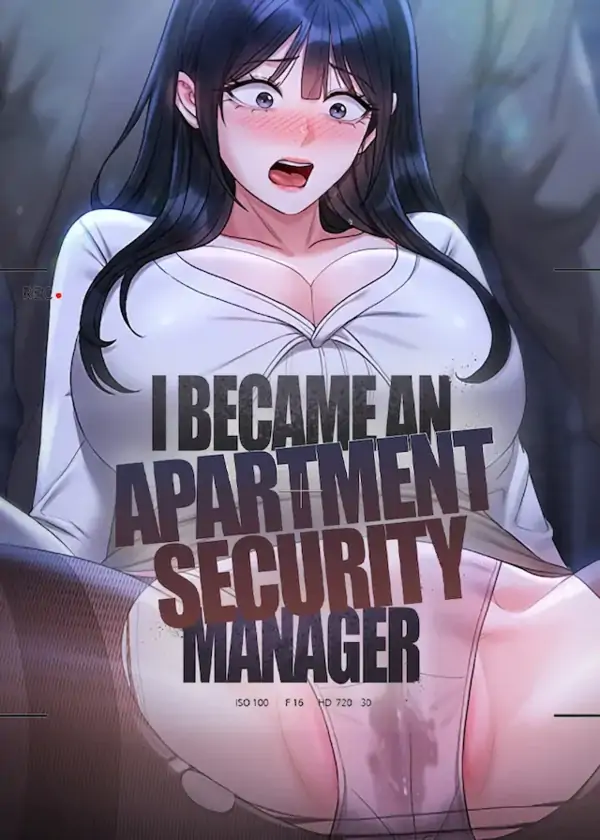
I Became An Apartment Security Manager (Ωmega Scans) – Main Plot and Review
Unveiling the Dark Desires: A Deep Dive into I Became An Apartment Security Manager (Ωmega Scans) for its gripping drama, psychological depth, and mature themes.
|||
# Unveiling the Dark Desires: A Definitive Deep Dive Review of I Became An Apartment Security Manager (Ωmega Scans)
## Introduction: The Phenomenon of I Became An Apartment Security Manager (Ωmega Scans)
Step into the shadowy, morally ambiguous world of `I Became An Apartment Security Manager (Ωmega Scans)`, a `manhwa` that has not merely captivated but utterly ensnared its global audience. This isn't just another `webtoon`; it's a meticulously crafted `seinen(M)` narrative that delves into the darkest corners of human desperation, desire, and the intoxicating allure of power. At its core, we find Lee Han, a man teetering on the precipice of ruin, drowning in an insurmountable tide of debt and despair. His life, a desolate wasteland of shattered aspirations, is abruptly jolted by an offer that is as insidious as it is irresistible. The proposition is simple yet profoundly dangerous: infiltrate an exclusive apartment complex, identify the vulnerabilities of its affluent female residents, and exploit them. "Get close to the women in this building! Seduce them, romance them, blackmail them, whatever method works." This directive serves as the chilling catalyst for a journey into a moral labyrinth where every choice carries seismic consequences.
The premise alone ensures `I Became An Apartment Security Manager (Ωmega Scans)` stands out in the crowded `manhwa` landscape. It immediately signals a narrative saturated with `drama`, `psychological` tension, and `mature` themes that push boundaries. From the initial chapter, readers are thrust into a high-stakes game of manipulation and seduction, where the lines between right and wrong blur into an indistinguishable haze. The series expertly navigates the often-controversial waters of `smut` and `Netorare/NTR`, not merely for shock value, but as integral components of a complex plot exploring power dynamics, `cheating/infidelity`, and the ultimate cost of revenge.
What makes this particular `webtoon` a true phenomenon is its unwavering commitment to psychological depth. It doesn't shy away from the visceral realities of its premise, but rather leans into them, forcing both its protagonist and its readership to confront uncomfortable truths about human nature. The team at `Ωmega Scans` has done an exemplary job in bringing this compelling narrative to a wider, international audience, preserving the nuance and intensity that define its original Korean incarnation, *Apateu Gwalliini Doeeotda* (아파트 관리인이 되었다). Known also by its various global titles such as *Became an Apartment Manager*, *I Became the Apartment Manager*, *ヤリマンションの管理人* in Japanese, and *獵艷管理員* / *猎艳管理员* in Chinese, its universal appeal lies in its exploration of primal human instincts, albeit through a highly stylized and often explicit lens. This deep dive aims to dissect every facet of this remarkable series, from its intricate plot to its breathtaking art, solidifying its status as a must-read for fans of profound `adult` storytelling.
## In-Depth Plot Analysis & World Building of I Became An Apartment Security Manager (Ωmega Scans)
The narrative tapestry of `I Became An Apartment Security Manager (Ωmega Scans)` is woven with threads of desperation, cunning, and raw human vulnerability, creating a `manhwa` that is both viscerally engaging and intellectually stimulating. The initial setup is crucial, immediately establishing the high stakes and morally fraught terrain Lee Han must navigate.
### Lee Han's Desperate Beginnings
Lee Han's life before assuming the mantle of an apartment security manager is depicted as a stark, unforgiving tableau of failure and insurmountable debt. He is not merely down on his luck; he is utterly broken, crushed under the weight of financial ruin that threatens to consume his very existence. This pre-existing trauma and desperation are critical to understanding his subsequent actions. He is not a sociopath by nature, but a man pushed to his absolute limits, seeing this illicit offer as his only lifeline, his last desperate gasp for air before drowning completely. This foundation immediately imbues his character with a tragic edge, making his descent into manipulation more complex than simple villainy.
The mysterious benefactor or client who extends this offer remains largely in the shadows initially, adding an element of grand conspiracy and veiled puppet-mastery to the plot. Their motives are initially obscured, perhaps driven by a desire for `revenge`, power, or simply a twisted form of amusement. The way the offer is presented—an almost Faustian bargain—highlights the ethical chasm Lee Han is asked to cross. It’s an explicit instruction to exploit, to manipulate, to destroy lives for his own gain, an undeniable act of `cheating/infidelity` against the residents and their unsuspecting spouses. The psychological pressure placed upon him is immense, forcing him to rationalize actions that fundamentally contradict any semblance of moral decency he might have once possessed.
The apartment building itself, where the entirety of this `drama` unfolds, is far more than a mere backdrop. It functions as a gilded cage, a luxurious prison where secrets fester beneath polished surfaces and designer facades. Its opulence starkly contrasts with the moral decay brewing within its walls. Each unit, a distinct dwelling, represents a unique target, a new challenge for Lee Han. The building becomes a microcosm of society, where wealth often masks profound loneliness, marital discontent, and hidden desires, making it a perfectly fertile ground for the `Netorare/NTR` dynamics that are central to the `manhwa`'s appeal. This elaborate setting enhances the `psychological` tension, trapping both protagonist and prey within a confined, high-stakes arena.
### The Initial Assignments and Moral Descent
Lee Han's first assignment is meticulously laid out: target Han Soojin, the seemingly demure married woman residing in Unit 301. His approach to her is not haphazard; it's a calculated campaign of observation, subtle infiltration, and strategic manipulation. He meticulously uncovers her vulnerabilities, her unspoken desires, and the cracks in her seemingly perfect life. Whether it's a neglected marriage, a secret yearning for passion, or a deep-seated insecurity, Lee Han is tasked with finding that weakness and exploiting it without mercy. The early chapters focus intensely on this initial seduction, detailing the precise steps Lee Han takes—from feigned concern to strategic compliments, from creating opportunities for intimacy to leveraging confidential information gained from his position as a security manager.
The process of "finding her weakness quickly" is depicted with a chilling level of detail. It’s a slow burn of psychological warfare, where trust is built only to be shattered, and genuine connection is merely a tool for ulterior motives. The `smut` elements are interwoven not as gratuitous scenes, but as the inevitable culmination of these manipulative tactics, showcasing the explicit nature of the exploitation. Lee Han's internal conflict is palpable during these early stages. He grapples with the enormity of his actions, the cognitive dissonance of knowing he is destroying lives while simultaneously justifying it as his only path to survival. This `psychological` struggle is a cornerstone of the `manhwa`, elevating it beyond simple exploitation into a deeper character study.
As the narrative progresses, Lee Han moves from one target to the next, each woman presenting a unique set of challenges and vulnerabilities. The diversity of the female residents – from the unhappily married to the career-driven, from the lonely to the secretly rebellious – allows the `manhwa` to explore a wide spectrum of human relationships and desires. The `Age Gap` often plays a subtle role, adding another layer to the power dynamics and the specific types of vulnerabilities Lee Han targets. His methods evolve, becoming more refined, more ruthless, yet always tinged with that underlying desperation. The growing `harem` is less about mutual affection and more about a web of control and dependency, making the `Netorare/NTR` element increasingly pervasive and integral to the plot. Each success deepens his entanglement, solidifying his role as the apartment's predator.
### Escalation of Stakes and Psychological Toll
The `drama` inherent in `I Became An Apartment Security Manager (Ωmega Scans)` escalates with each successful seduction. The game becomes exponentially more complex as Lee Han's victims are not passive dolls; they are individuals with their own agency, emotions, and in some cases, a capacity for retaliation. Unforeseen complications arise—jealous husbands, suspicious neighbors, accidental slips, or even the women themselves starting to develop genuine feelings, complicating Lee Han's mission and his already fractured psyche. These elements inject immense `psychological` tension, as Lee Han constantly walks a tightrope, knowing one misstep could lead to his ruin or worse.
The consequences for Lee Han are profound and multifaceted. Is he truly losing himself in this cesspool of manipulation and `cheating/infidelity`? Is he becoming the monster he initially despised, or is he merely adapting to a cruel world? The `manhwa` expertly portrays the subtle erosion of his moral compass, the increasing ease with which he orchestrates deceit. The toll on his mental state is a central theme, manifesting in moments of guilt, paranoia, and the chilling realization of his own transformation. The narrative often explores whether there is any possibility of redemption for a character so deeply entrenched in such morally reprehensible actions, or if he is destined for an ultimate downfall as a form of `revenge` from those he has wronged.
Beyond the immediate assignments, the `manhwa` hints at a broader, more intricate conspiracy orchestrated by the mysterious client. This overarching plot adds another layer of intrigue, suggesting that Lee Han is but a pawn in a larger game. Are there other managers? What is the client's endgame? The introduction of rival manipulators or unexpected allies further complicates the `harem` dynamics and the overall narrative, transforming what began as a personal mission of survival into a sprawling saga of power, `violence` (both physical and psychological), and control. The `Netorare/NTR` becomes less about individual instances and more about the systemic corruption woven into the fabric of this affluent, yet morally bankrupt, apartment community.
## Comprehensive Character Study
The characters in `I Became An Apartment Security Manager (Ωmega Scans)` are the beating heart of its `drama`, each meticulously crafted to embody specific psychological complexities and serve the overarching narrative of manipulation and desperation.
### Protagonist Analysis: Lee Han, The Reluctant Predator
Lee Han is arguably one of the most compelling and morally ambiguous protagonists in recent `manhwa` history. His `psychological` profile is a rich tapestry woven with threads of deep-seated trauma, profound past failures, and an overwhelming sense of hopelessness that predates his entry into the apartment manager role. Before the offer, he was a man rendered invisible by society, crushed by debt, and stripped of his dignity. This pre-existing vulnerability is crucial; it establishes his core motivation not as inherent malice, but as an desperate drive for survival, perhaps even a twisted form of `revenge` against a system that had failed him.
His evolution (or de-evolution) throughout the series is a central thematic arc. Initially, he is a passive victim, a desperate man forced into an unthinkable role. However, as he gains proficiency in manipulation and seduction, he slowly transforms into an active perpetrator. The series masterfully blurs the line: does he enjoy the power, the control, the `smut` and `harem` elements that come with his job? Or does he resent every action, hating himself with each successful `cheating/infidelity` he orchestrates? This internal conflict is exquisitely portrayed through his often-tormented facial expressions, his internal monologues, and his occasional glimpses of guilt. He is a character constantly battling his own conscience, even as he systematically dismantles the lives of others. His survival mechanism involves shutting off empathy, but the `manhwa` frequently reminds us that this switch is never fully off, leaving him vulnerable to emotional repercussions.
Lee Han's skills are undeniable: he possesses keen observational abilities, allowing him to quickly identify vulnerabilities; he is a master of subtle manipulation, capable of weaving intricate webs of deceit; and he carries a deceptively charming exterior that disarms his targets. His resilience in the face of escalating danger and psychological pressure is also noteworthy. Yet, he is not invincible. His weaknesses are equally significant: an underlying emotional vulnerability, the persistent pangs of guilt, and the ever-present danger of forming genuine connections, which would ultimately jeopardize his mission and unravel his carefully constructed persona. His journey is a deep dive into the human capacity for both cruelty and self-preservation, with the underlying question: can such a character ever truly find redemption, or is he destined to be consumed by the very darkness he unleashes? The concept of `revenge` against his past failures or against society itself constantly simmers beneath his actions.
### Antagonist/Side Character Analysis: The Web of Deceit
The array of characters in `I Became An Apartment Security Manager (Ωmega Scans)` extends beyond Lee Han, forming a complex web of prey, predators, and unseen puppet masters.
Han Soojin (Unit 301) serves as the primary example of Lee Han's targets and sets the tone for the `Netorare/NTR` and `cheating/infidelity` themes. Her background likely includes elements of marital neglect or unfulfilled desires, making her susceptible to Lee Han's carefully crafted advances. Her vulnerabilities are meticulously exploited, showcasing the predatory nature of Lee Han's role. She represents the "first domino," the initial fall that precipitates Lee Han's deeper immersion into his morally compromised mission. Her character arc, often tragic, highlights the devastating impact of Lee Han's actions, demonstrating that these are not mere conquests but profound betrayals.
The other significant female residents of the building are not interchangeable archetypes; each possesses a distinct personality, a unique backstory, and specific psychological weaknesses that Lee Han expertly targets. There's the lonely housewife longing for attention, the career woman burdened by societal expectations, the young professional seeking escape from a mundane life, or the older woman experiencing an `age gap` related crisis. The `manhwa` dedicates sufficient time to flesh out these women, making their inevitable entanglement with Lee Han feel earned, rather than arbitrary. Their reactions range from initial resistance to complete capitulation, from genuine affection to furious `revenge` when they realize the extent of his manipulation. This diversity prevents the `harem` aspect from becoming monotonous, instead turning it into a complex study of human needs and vulnerabilities.
The mysterious client, the ultimate puppet master, remains an enigmatic force, exerting immense pressure on Lee Han from the shadows. Their motivations are gradually revealed, often hinting at a deep-seated `revenge` or a desire to orchestrate a grand scheme of social disruption. Their role is crucial in maintaining the overarching suspense and driving Lee Han's actions, reminding him of the severe consequences of failure. The exploration of this client’s background and ultimate goals adds a thrilling layer to the `psychological` `drama`. Other male characters, often the unwitting husbands or boyfriends of Lee Han's targets, serve to heighten the `Netorare/NTR` element. Their obliviousness or eventual discovery of the `cheating/infidelity` generates significant `drama` and fuels the narrative's tension.
### Relationship Dynamics (Chemistry) in I Became An Apartment Security Manager (Ωmega Scans)
The relationships Lee Han cultivates within the apartment complex are, by design, fundamentally transactional and rooted in manipulation. True intimacy, in the conventional sense, is a rare and fleeting commodity, often serving as another tool in his arsenal. The `manhwa` skillfully explores the profound difference between genuine connection and engineered intimacy, highlighting the psychological toll this takes on both Lee Han and his targets. The `smut` scenes, while explicit, are often imbued with this underlying tension, showcasing the uneasy mix of physical gratification and emotional deceit.
Power dynamics are central to every interaction. Lee Han, initially powerless in his own life, gains immense control over the women he targets, leveraging their secrets and vulnerabilities. However, this power is fluid; the women, too, exert a form of control, whether through their emotional demands, their potential for discovery, or even their own manipulative tendencies. This constant push and pull creates a fascinating and often volatile relationship landscape. The `age gap` element, when present, often further skews these power dynamics, sometimes making the women feel more vulnerable or, conversely, empowering them in unexpected ways as they navigate the illicit relationships.
The `harem` aspect of the `manhwa` is therefore not one of mutual affection but a collection of distinct, often conflicting, relationships, each driven by different needs and deceits. The `psychological` manipulation is paramount, with Lee Han expertly identifying and exploiting the unique emotional voids of each woman. This `cheating/infidelity` is not just a plot device; it's a thematic exploration of trust, betrayal, and the devastating impact of shattered illusions. The `Netorare/NTR` themes are consistently explored, examining the emotional and psychological devastation wrought by these acts on all parties involved. The raw `drama` of these tangled relationships makes `I Became An Apartment Security Manager (Ωmega Scans)` a compelling, albeit often disturbing, read.
## Artistic Review: The Visual Mastery of I Became An Apartment Security Manager (Ωmega Scans)
The visual artistry of `I Became An Apartment Security Manager (Ωmega Scans)` is a crucial component of its success, elevating the `manhwa` from a mere story into an immersive and highly atmospheric experience. The art style is not just competent; it is masterfully executed, blending a high degree of realism with just enough stylization to amplify emotional intensity and explicit content.
### Line Work and Panel Flow: Guiding the Reader's Eye
The line work in `I Became An Apartment Security Manager (Ωmega Scans)` is exquisitely precise and consistently clean, contributing significantly to the `webtoon`'s professional polish. Character outlines are crisp and defined, yet possess a fluidity that allows for dynamic movement and expressive body language, particularly in scenes of heightened emotion or physical intimacy. Fine details in hair, clothing textures, and intricate backgrounds are rendered with remarkable care, creating a visually rich environment that pulls the reader deep into the world of the apartment complex. Facial expressions are a standout feature, conveying a vast spectrum of human emotion – from Lee Han’s conflicted guilt and cunning charm to the women’s initial reluctance, burgeoning desire, and eventual despair. These detailed expressions are vital for the `psychological` `drama` and `adult` themes.
The panel flow is expertly managed, dictating the narrative pacing with remarkable efficacy. The creators employ a diverse range of panel layouts, from sequential grids that create a steady, methodical build-up of tension, to dynamic, diagonally oriented panels that accelerate the action or convey a sense of unease. Splash pages are used judiciously, often to highlight pivotal moments, reveal shocking twists, or accentuate the intensity of `smut` scenes, making them feel impactful rather than simply gratuitous. The strategic use of close-ups is particularly effective in emphasizing character reactions, unspoken desires, and the subtle nuances of manipulation, forcing the reader to confront the raw emotions at play. Conversely, wider shots establish the luxurious yet isolating atmosphere of the apartment building, contrasting the characters' inner turmoil with their seemingly opulent surroundings. This deliberate visual storytelling ensures that every beat of the `drama` is felt keenly.
### Color Palette and Shading: Crafting Atmosphere
The color palette of `I Became An Apartment Security Manager (Ωmega Scans)` is both rich and deliberate, serving to establish and deepen the `manhwa`'s prevailing atmosphere. Vibrant, alluring hues are employed during moments of passion or seduction, creating a sense of intoxicating desire and temptation. These often give way to more subdued, muted tones that convey melancholy, suspicion, or the bleak reality of Lee Han's emotional state. The contrast is powerful, visually mapping the shifting moods and moral complexities of the story. The symbolic use of color, perhaps brighter colors associated with moments of false hope or darker, shadowed tones for acts of `cheating/infidelity` or `revenge`, adds another layer of artistic depth.
Shading is employed with a master's touch, creating incredible depth and realism. Lighting plays a crucial role, mimicking natural light sources within the apartment setting, but also used dramatically to create suspense, highlight contours, or cast characters in moral ambiguity. The interplay of light and shadow is particularly effective in `smut` scenes, adding an element of sensual mystery and intimacy without being overtly explicit in every frame. It sculpts character features, making them feel three-dimensional and tangible. The attention to detail in character design extends to their fashion, hair, and accessories, each element contributing to their personality and socioeconomic status within the apartment building. Anatomical accuracy in the explicit scenes is handled with a mature sensibility, ensuring believability while serving the narrative rather than existing purely for display. The art captures the `adult` and `mature` essence of the comic with fidelity and taste, even in its most explicit moments.
### World Representation: Immersion and Detail
The backgrounds in `I Became An Apartment Security Manager (Ωmega Scans)` are far from generic. They are intricately detailed, making the luxurious apartment building a character in itself. From the polished marble floors of the lobby to the opulent interior designs of individual units, every setting feels lived-in and authentic. The urban landscape glimpsed through windows grounds the story in a believable reality, enhancing the `drama` and `psychological` tension by making the reader feel truly immersed. This meticulous world-building through art is essential for conveying the stakes and the claustrophobic feeling of being trapped within this specific, high-stakes environment.
The overall aesthetic leans towards a highly realistic style, which grounds the extreme `smut` and `Netorare/NTR` elements in a believable context. This realism makes the `violence` (often emotional or psychological, but sometimes physical) more impactful, and the `cheating/infidelity` more agonizing. The art doesn’t shy away from depicting the ugliness alongside the allure, contributing to the `mature` and `seinen(M)` classification of the `manhwa`. The visual mastery ensures that `I Became An Apartment Security Manager (Ωmega Scans)` is not just a story to be read, but a world to be experienced, with every line, color, and shadow contributing to its unforgettable impact.
## Why I Became An Apartment Security Manager (Ωmega Scans) Stands Out: A Comparative Analysis
In the vast and ever-growing landscape of `manhwa` and `webtoon` series, `I Became An Apartment Security Manager (Ωmega Scans)` distinguishes itself through its unflinching `psychological` depth, complex character motivations, and a nuanced approach to often sensationalized themes. It transcends typical genre expectations, establishing itself as a standout `seinen(M)` work.
### Beyond the Surface-Level Smut
While `I Became An Apartment Security Manager (Ωmega Scans)` unapologetically embraces `smut` and `harem` elements, it consciously pushes beyond mere titillation. Unlike many contemporaries that prioritize explicit content above all else (e.g., some purely recreational *adult* comics), this `manhwa` uses its explicit scenes as integral plot points, serving to deepen the `drama` and underscore the characters' psychological states. The `Netorare/NTR` themes are not just for shock value; they are explored with a deliberate focus on the emotional and moral implications of `cheating/infidelity`, revealing the profound impact on all parties involved.
When compared to a series like *Sweet Guy*, which often maintains a lighter, more comedic tone despite its `harem` premise, *I Became An Apartment Security Manager* delves into far darker, more serious territory. It shares some thematic DNA with works like *Silent War* (or *My Kingdom*), particularly in its exploration of calculated manipulation and `psychological` warfare, but *I Became An Apartment Security Manager* often feels more visceral, more grounded in the immediate desperation of its protagonist. While *Secret Class* or *The Savory Girl* also feature explicit content and `Netorare/NTR` elements, `I Became An Apartment Security Manager (Ωmega Scans)` stands apart by offering a more consistent, overarching plot driven by a clear, albeit morally ambiguous, objective, rather than a series of disconnected sexual encounters. Its engagement with `revenge` as a driving force adds another layer of complexity rarely seen in simple `smut` offerings.
### Thematic Depth and Narrative Innovation
The narrative innovation of `I Became An Apartment Security Manager (Ωmega Scans)` lies in its ability to elevate the `Netorare/NTR` subgenre, transforming it into a vehicle for examining profound themes. It's not just about the act of `cheating/infidelity`; it's about the systemic exploitation of human vulnerabilities, the corrosive nature of desperation, and the thin line between victim and perpetrator. The consistent emphasis on Lee Han's internal struggles and the `psychological` toll of his actions ensures that the story remains anchored in human experience, even amidst its darkest moments.
The `manhwa` strikes a delicate but potent balance between explicit content and gripping `drama`. The `violence`, though often psychological, is palpable, and the stakes feel genuinely high. It explores the intricate dynamics of power, the intoxicating allure of control, and the devastating consequences of moral compromise in a unique and contained setting. The `Age Gap` dynamics also add another layer, sometimes making the power imbalances more pronounced or leading to different kinds of vulnerabilities. The story’s global recognition, evident in its various titles like *Apateu Gwalliini Doeeotda* (아파트 관리인이 되었다), *Became an Apartment Manager*, *I Became the Apartment Manager*, Japanese *ヤリマンションの管理人*, and Chinese *獵艷管理員* / *猎艳管理员*, speaks to its universal appeal in exploring these fundamental, albeit controversial, human experiences. `I Became An Apartment Security Manager (Ωmega Scans)` dares to ask uncomfortable questions, providing a challenging and unforgettable `adult` reading experience.
## FAQ: Everything You Need to Know about I Became An Apartment Security Manager (Ωmega Scans)
### What is "I Became An Apartment Security Manager (Ωmega Scans)" about?
`I Became An Apartment Security Manager (Ωmega Scans)` centers on Lee Han, a man burdened by crippling debt. He accepts a sinister offer to become an apartment security manager with a hidden agenda: to identify and exploit the vulnerabilities of the building's wealthy female residents through seduction, manipulation, and blackmail. The story details his morally compromising journey as he navigates a complex web of desires, secrets, and `cheating/infidelity`, all while struggling with his own conscience and the escalating stakes of his mission. It's a deep dive into `psychological` `drama` and `revenge` in a `harem` setting.
### Is "I Became An Apartment Security Manager (Ωmega Scans)" suitable for all readers?
Absolutely not. `I Became An Apartment Security Manager (Ωmega Scans)` is unequivocally an `adult`, `mature`, and `seinen(M)` `manhwa`. It contains explicit `smut` content, strong themes of `Netorare/NTR` (cheating/infidelity), `violence` (both physical and psychological), manipulation, and complex moral dilemmas. Readers should be prepared for dark themes, morally ambiguous characters, and content that explores the darker aspects of human nature. It is intended only for mature audiences who are comfortable with such challenging material.
### What are the key themes explored in "I Became An Apartment Security Manager (Ωmega Scans)"?
The `manhwa` explores a rich tapestry of compelling themes including `revenge`, desperation, the corruption of power, `Netorare/NTR` and `cheating/infidelity` (both physical and emotional), `psychological` manipulation, and the intoxicating allure of control. It delves into the fine line between survival and moral decay, the impact of societal pressures, and the complexities of human desire. Elements of `age gap` relationships and `harem` dynamics are also central to the narrative, all contributing to a profound `drama`.
### How does the art style enhance the story of "I Became An Apartment Security Manager (Ωmega Scans)"?
The art style of `I Became An Apartment Security Manager (Ωmega Scans)` is remarkably detailed and realistic, playing a pivotal role in enhancing the narrative. Its crisp line work, sophisticated shading, and carefully chosen color palette create a highly immersive and atmospheric experience. The expressive character designs effectively convey deep `psychological` states and emotions, while detailed backgrounds ground the story in a believable, luxurious setting. The art masterfully balances the `smut` elements with the `drama`, making both the explicit scenes and the intense emotional moments feel impactful and integral to the `mature` storytelling.
### Where can I read "I Became An Apartment Security Manager (Ωmega Scans)" legally?
You can read `I Became An Apartment Security Manager (Ωmega Scans)` legally and support the creators at JellyComics. As a platform committed to providing high-quality `manhwa` and `webtoon` content, JellyComics ensures you get the best reading experience while respecting the artists and writers who bring these captivating stories to life. Search for titles like *Apateu Gwalliini Doeeotda*, *Became an Apartment Manager*, or *I Became the Apartment Manager* if you encounter different versions, but `I Became An Apartment Security Manager (Ωmega Scans)` is the primary title to look for on JellyComics.
## Final Verdict: Why You Must Read It at JellyComics
As a Lead Comic Critic at JellyComics, I can unequivocally state that `I Became An Apartment Security Manager (Ωmega Scans)` is not merely a `manhwa`; it is an experience, a relentless deep dive into the human psyche that challenges, provokes, and ultimately, captivates. It’s a masterclass in `psychological` `drama`, expertly weaving together elements of `smut`, `Netorare/NTR`, `cheating/infidelity`, and `revenge` into a narrative that is both disturbing and irresistibly compelling. The story of Lee Han’s descent, fueled by desperation and a thirst for survival, is a compelling character study that resonates long after the final panel.
The brilliance of `I Became An Apartment Security Manager (Ωmega Scans)` lies in its commitment to thematic depth. It refuses to shy away from the darker aspects of human nature, instead, embracing them to craft a story that explores power, vulnerability, and the moral compromises people make when pushed to their limits. The `harem` element is handled with a sophistication that goes beyond mere gratification, exploring the nuances of each relationship and the profound `psychological` impact of `age gap` and `cheating/infidelity` dynamics. This isn't just an `adult` comic; it's a `seinen(M)` masterpiece that tackles complex issues with unflinching honesty.
Visually, the `manhwa` is nothing short of stunning. The art style is hyper-detailed, expressive, and atmospheric, ensuring that every emotion, every betrayal, and every intimate moment is conveyed with maximum impact. The crisp line work, masterful shading, and dynamic paneling elevate the storytelling, making the apartment complex itself feel like a living, breathing character, filled with secrets and hidden desires. The `violence`, though often subtle and psychological, is amplified by the sheer artistic prowess.
If you are a fan of `mature` `webtoon` narratives that offer more than just surface-level `smut` – if you crave `drama` and `psychological` intensity, if you're prepared to delve into the morally ambiguous depths of human motivation – then `I Became An Apartment Security Manager (Ωmega Scans)` is an absolute must-read. Its unique blend of `revenge` and `Netorare/NTR` themes, coupled with a protagonist you’ll love to hate and hate to love, positions it as a true standout in the genre. Do yourself a favor and immerse yourself in this unforgettable saga. Experience the full, unadulterated brilliance of `I Became An Apartment Security Manager (Ωmega Scans)` today at JellyComics. You won't regret it.
Frequently Asked Questions about I Became An Apartment Security Manager (Ωmega Scans)
What genre is I Became An Apartment Security Manager (Ωmega Scans)? Generally, I Became An Apartment Security Manager (Ωmega Scans) falls under the Manhwa,, Manhwa, Webtoon,, Webtoon, Seinen(M),, Seinen(M), Adult,, Adult, Mature,, Mature, Smut,, Smut, Violence,, Violence, Age Gap,, Age Gap, Cheating/Infidelity,, Cheating/Infidelity, Drama,, Drama, Harem,, Harem, Netorare/NTR,, Netorare/NTR, Psychological,, Psychological, Revenge, Revenge category, featuring a storyline focused on character emotions and engaging plot twists.
Why should you read I Became An Apartment Security Manager (Ωmega Scans)? If you enjoy stories with emotional depth, well-developed characters, and unexpected turns, I Became An Apartment Security Manager (Ωmega Scans) is definitely a great choice.
Who is I Became An Apartment Security Manager (Ωmega Scans) suitable for? Depending on the specific arc, I Became An Apartment Security Manager (Ωmega Scans) can be suitable for both newcomers and long-time fans of this genre.
If you love I Became An Apartment Security Manager (Ωmega Scans), don’t forget to check out similar series at Truyện tranh 18+.
To explore more reviews and perspectives on I Became An Apartment Security Manager (Ωmega Scans), you can refer to https://jellycomics.com/nhom-dich/jellycomics/.
Jelly Comics (JC) là trang web truyện tranh hàng đầu dành cho những người đam mê truyện tranh. Với một bộ sưu tập đa dạng và phong phú, trang web đem đến cho bạn những giờ phút giải trí tuyệt vời và một trải nghiệm truyện tranh hoàn toàn miễn phí. Nếu bạn là một fan hâm mộ truyện tranh, hãy đến với JC để khám phá thế giới truyện tranh không giới hạn!Hãy truy cập vào Jelly Comics ngay hôm nay để khám phá thế giới truyện tranh đa dạng và thú vị. Là điểm đến lý tưởng cho những bạn đam mê truyện tranh và muốn khám phá thế giới đa dạng và thú vị của truyện tranh miễn phí. Thế giới truyện tranh đang chờ bạn khám phá!
Chapter 26
Chapter 25
Chapter 24
Chapter 23
Chapter 22
Chapter 21
Chapter 20
Chapter 19
Chapter 18
Chapter 17
Chapter 16
Chapter 15
Chapter 14
Chapter 13
Chapter 12
Chapter 11
Chapter 10
Chapter 9
Chapter 8
Chapter 7
Chapter 6
Chapter 5
Chapter 4
Chapter 3
Chapter 2
Chapter 1


