- Tên khác: type , to searchsearchComics, Destroy It All And Love Me In Hell!, Hủy diệt tất cả và yêu tôi dưới địa ngục!, 全てを破壊しろ、地獄で私を愛せ
- Tác giả: Kuwabara Tamotsu
- Nhóm Dịch: Jellycomics ©
- Thể loại: JELLYCOMICS ©, MANGA, RAW, Violence, Yuri(GL), 🇯🇵
- Thẻ: brutal manga, dark yuri manga, Destroy It All And Love Me In Hell, GL manga, Kuwabara Tamotsu, psychological manga, psychological yuri manga, Yuri manga
- Trạng thái: OnGoing
- Ngày thêm: 01/16/2026
- Tổng lượt xem: 28
Destroy It All And Love Me In Hell! belongs to the genre 🇯🇵, 🇯🇵, Manga,, Manga, Yuri(GL),, Yuri(GL), Violence,, Violence, Psychological,, Psychological, Romance,, Romance, School Life, School Life by author Kuwabara Tamotsu is a manga series that has garnered significant attention. The following article provides a detailed overview of the plot, setting, and why Destroy It All And Love Me In Hell! is worth adding to your reading list.
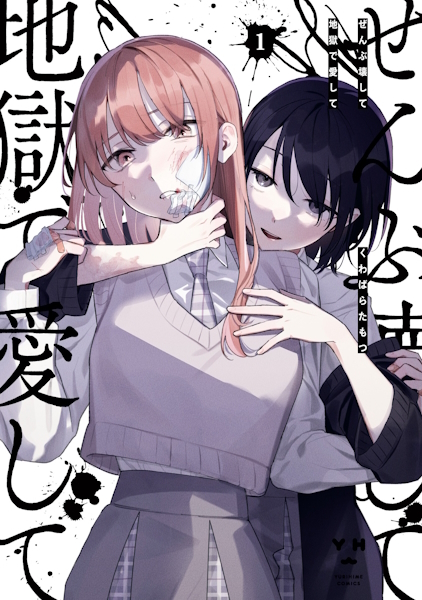
Destroy It All And Love Me In Hell! – Main Plot and Review
Unleash your dark desires: Dive into "Destroy It All And Love Me In Hell!", a brutal yet beautiful psychological yuri manga.
|||
# A Descent into the Abyss: Why "Destroy It All And Love Me In Hell!" is a Psychological GL Manga Masterpiece You Cannot Miss
Welcome, fellow connoisseurs of compelling narratives and masterful artistry, to JellyComics' premier deep dive. Today, we peel back the layers of a truly formidable entry into the psychological yuri genre, a series that has captivated the collective consciousness of manga enthusiasts and solidified its place as a groundbreaking work: *Destroy It All And Love Me In Hell!* Kuwabara Tamotsu delivers a narrative that doesn't just push boundaries; it obliterates them, forcing readers to confront the uncomfortable truths of human fragility, the masks we wear, and the savage beauty of finding solace in the most unexpected—and perhaps, destructive—of connections. This isn't just a story; it's an experience, an emotional rollercoaster that plunges into the deepest chasms of the human psyche before hinting at the faintest glimmer of light.
The sheer popularity surrounding *Destroy It All And Love Me In Hell!* is undeniable, a testament to its raw power and evocative storytelling. With an impressive total of 308.3K views and a consistent engagement that saw 255.4K views in the last 360 days, alongside a significant 2.9K follows, it's clear that this GL manga resonates deeply with its audience. The consistent stream of updates, reflected by activity as recent as 21 days ago, 57 days ago, and throughout the past year, ensures that fans remain engrossed in its unfolding drama. It stands as a beacon for those seeking more than just a surface-level romance; it’s a journey into the heart of darkness, where violence, psychological torment, and an unconventional romance intertwine to create something profoundly impactful. *Destroy It All And Love Me In Hell!* challenges perceptions, demands introspection, and ultimately, leaves an indelible mark on its readers. This is the kind of **Yuri (GL)** experience that redefines the genre, pushing it beyond saccharine sweetness into the realm of gritty, emotionally charged realism.
## Introduction: The Phenomenon of Destroy It All And Love Me In Hell!
In the ever-expanding landscape of manga, certain titles emerge that defy easy categorization, instead carving out a unique niche that demands attention. *Destroy It All And Love Me In Hell!* is precisely such a work. From the moment its initial chapters graced our screens, it became clear that Kuwabara Tamotsu was not interested in telling a conventional story. This is a narrative woven with threads of deep psychological complexity, a haunting exploration of trauma, and the unlikely forging of a bond amidst the ruins of two shattered lives. It delves headfirst into the often-unspoken pressures of societal expectations, the suffocating grip of parental control, and the desperate yearning for authenticity in a world that often rewards conformity.
The premise, while deceptively simple on the surface, quickly unravels into a labyrinthine exploration of its protagonists' inner worlds. We are introduced to Kurumi Yoshizawa, the quintessential "perfect student"—a paragon of academic excellence and social grace, adorned with an inviting, friendly personality. Yet, this is merely a meticulously crafted facade, a fragile shield against the relentless onslaught of her domineering mother's expectations and the crushing weight of her teachers' demands. Her days are a constant struggle, a tightrope walk between maintaining this flawless image and the burgeoning chaos within. The brilliance of *Destroy It All And Love Me In Hell!* lies in its immediate dismantling of this illusion, inviting us into the raw, unvarnished truth of Kurumi's internal agony.
The catalyst for this unraveling arrives in the form of Naoi, a truant classmate whose very presence disrupts Kurumi's carefully constructed world. This initial encounter, born out of a teacher's well-meaning but ultimately misguided request for Kurumi to "look after" Naoi, sets the stage for a relationship built on confrontation rather than camaraderie. Naoi, with an almost preternatural intuition, immediately pierces through Kurumi's polished exterior, recognizing the simmering resentment and profound unhappiness beneath. This act of seeing, of recognizing the true Kurumi, triggers not immediate kinship, but animosity, a volatile friction that threatens to consume them both. It is a testament to Kuwabara Tamotsu’s skill that this nascent relationship, steeped in tension and discomfort, quickly becomes the beating heart of *Destroy It All And Love Me In Hell!*.
The very title, *Destroy It All And Love Me In Hell!*, serves as a powerful thematic declaration, hinting at the destructive forces at play and the unconventional, almost desperate, form of love that might emerge from the ashes. This is a story that doesn't shy away from the dark corners of the human experience. It is imbued with elements of **violence** – not always physical, but certainly psychological and emotional – alongside a pervasive sense of **school life** drama that quickly morphs into something far more sinister and introspective. For fans of **GL manga** who are looking for a story that dares to be different, that explores the darker side of human connection with unflinching honesty, *Destroy It All And Love Me In Hell!* offers an unforgettable and deeply unsettling, yet ultimately compelling, reading experience. Its popularity figures, from rapid daily views to consistent weekly engagement, speak volumes about its undeniable impact and status as a must-read **manga**.
## In-Depth Plot Analysis & World Building of Destroy It All And Love Me In Hell!
The narrative tapestry of *Destroy It All And Love Me In Hell!* is intricately woven, beginning with the stark contrast between public perception and private reality. Kurumi Yoshizawa exists in a gilded cage of her own making, meticulously constructed from the expectations of others. She is the epitome of the model student, a perfect daughter, a future success story. Her life is a carefully choreographed performance, each smile, each excellent grade, each polite interaction a part of a grand illusion designed to appease her demanding mother and satisfy her teachers. The opening chapters meticulously detail this facade, allowing the reader to understand the immense psychological toll it exacts. Every day is a battle fought within, a constant suppression of her true self, a denial of her burgeoning frustrations and resentments. The world of *Destroy It All And Love Me In Hell!* is, initially, a seemingly ordinary high school setting, but it quickly transforms into a pressure cooker for Kurumi's suppressed emotions.
The pivotal moment, the first crack in Kurumi's pristine veneer, arrives with the mandated interaction with Naoi. The school, in its infinite wisdom, assigns Kurumi the task of "rehabilitating" the truant Naoi. This well-intentioned but ill-fated directive thrusts two diametrically opposed individuals into each other's orbit. Kurumi, expecting another opportunity to showcase her perfected helpfulness, is met with an entirely different reality. Naoi, with her disheveled appearance and rebellious aura, represents everything Kurumi has been taught to avoid. Yet, Naoi possesses a unique, almost unsettling ability to see through the masks people wear. She doesn't fall for Kurumi's manufactured charm; instead, she sees the trembling anger, the deep-seated unhappiness, and the raw vulnerability hidden beneath. This immediate antagonism, rather than deterring the narrative, fuels it, establishing a volatile dynamic that defines their early interactions in *Destroy It All And Love Me In Hell!*.
The tension escalates dramatically during their fraught first meeting. Kurumi, already teetering on the brink of emotional collapse from the stress of her perfect life, finds Naoi's blunt honesty and overt animosity unbearable. The story masterfully portrays Kurumi's internal monologue during this scene, revealing her desperate struggle to maintain composure, to cling to her carefully cultivated image even as it crumbles. This internal turmoil manifests externally in a moment of sheer desperation: Kurumi, on the verge of a complete meltdown, almost succumbs to the urge to shoplift. This act, so utterly out of character for the "perfect" Kurumi, is a visceral scream for help, a desperate attempt to feel something real, something uncontrolled, even if it's destructive. The profound irony is that this deeply personal, humiliating moment is not unwitnessed. Naoi, ever the observer, captures the entire incident on her phone, unwittingly—or perhaps, intentionally—gaining an undeniable leverage over Kurumi. This single event irrevocably alters the power dynamic between the two girls, transforming their relationship from one of reluctant acquaintance to a complex entanglement of blackmail, fascination, and a burgeoning, twisted dependency in *Destroy It All And Love Me In Hell!*.
The world-building in *Destroy It All And Love Me In Hell!* isn't about fantastical landscapes or intricate magical systems; it's about the suffocating realism of contemporary Japanese society, particularly within the confines of the school system and the domestic sphere. The pressures on students, the emphasis on academic achievement, the parental desire for their children to conform to an ideal—these are the invisible walls that imprison Kurumi. The narrative expertly uses the mundane settings—classrooms, convenience stores, Kurumi’s meticulously clean home—to highlight the profound internal struggles of its characters. The mundane becomes menacing, a stage for their escalating psychological drama. The feeling of "no escape" that the synopsis mentions isn't just a hyperbolic statement; it's a palpable atmosphere created through the repetitive cycles of Kurumi's perfectionism and Naoi's relentless pushback. The urban environment, often depicted with a melancholic realism, mirrors the characters' internal states, providing a stark backdrop for their violent coming-of-age journey.
As the story progresses, the implications of Naoi's video recording deepen the plot considerably. It’s not just a threat; it’s a constant reminder of Kurumi’s vulnerability, her raw, exposed self. This act, initially one of pure manipulation, slowly morphs into something more profound. Naoi, through this leverage, effectively forces Kurumi to drop her facade, to confront the ugly truths she has so diligently buried. This is where *Destroy It All And Love Me In Hell!* transcends simple blackmail and enters the realm of deep **psychological** exploration. Kurumi's forced interactions with Naoi, initially begrudging and resentful, become a strange form of therapy. Naoi, despite her harshness, becomes the only person who truly sees Kurumi, the only one who doesn't demand perfection. This dangerous intimacy, born from coercion, opens up pathways for both girls to reveal their own wounds and vulnerabilities, gradually shifting the narrative from antagonism to an incredibly complex, dark **romance**.
The pacing of *Destroy It All And Love Me In Hell!* is deliberate, allowing readers to fully immerse themselves in the characters' internal struggles. It builds tension slowly, through lingering glances, unspoken words, and the insidious creep of psychological manipulation. The flashbacks, subtly interspersed, reveal the origins of Kurumi's trauma—the cold, unyielding pressure from her mother, the constant need to achieve, to be the best, at the expense of her own happiness and identity. Similarly, Naoi's own backstory, though initially shrouded in mystery, gradually surfaces, revealing the reasons behind her truancy and her rebellious nature. The plot arcs are not clean or linear; they twist and turn, reflecting the chaotic emotional landscapes of the protagonists. The "violence" isn't always physical; it's the violence of emotional abuse, of self-denial, of shattering facades, making *Destroy It All And Love Me In Hell!* a profoundly impactful experience for any reader looking for a truly deep and challenging **manga** narrative.
## Comprehensive Character Study
The heart of *Destroy It All And Love Me In Hell!* beats with the lives of its exceptionally complex characters. Kuwabara Tamotsu crafts individuals who feel excruciatingly real, burdened by their pasts and desperately navigating a present that offers little comfort. The nuanced portrayals are what elevate this **GL manga** beyond typical genre fare, ensuring that every interaction, every internal monologue, carries significant weight.
### Protagonist Analysis: Kurumi Yoshizawa
Kurumi Yoshizawa is a masterclass in the portrayal of a traumatized, repressed individual. On the surface, she embodies perfection: the diligent student council president, impeccable grades, a polite demeanor, and a seemingly boundless capacity for kindness. This carefully constructed persona is her defense mechanism, a meticulous performance honed over years of living under the oppressive thumb of her domineering mother. Her mother, whose presence is often felt more than seen, represents the relentless, suffocating force of societal expectations. Every achievement Kurumi garners, every praise she receives, further entrenches her in this cycle of striving for an unattainable ideal. Her internal world, however, is a tumultuous sea of anxiety, resentment, and a profound sense of self-loathing for the person she is forced to be.
Kurumi's trauma stems from this constant need to conform. She has effectively amputated her true self, burying her genuine desires and emotions under layers of forced smiles and compliant actions. This repression manifests in subtle yet chilling ways – the barely perceptible tremor in her hands, the strained politeness in her voice when she's stressed, the desperate internal pleas for release. The near-shoplifting incident is the first overt crack in her facade, a raw, almost primal scream from her suppressed self. It's a moment of destructive catharsis, a desperate attempt to break free from the suffocating perfection. This act, witnessed and recorded by Naoi, forces Kurumi into an unprecedented state of vulnerability.
Her growth arc in *Destroy It All And Love Me In Hell!* is not linear or comforting. It's a painful, often ugly process of deconstruction. Naoi, initially her tormentor, becomes the unwelcome catalyst for her awakening. Through Naoi's relentless probing and her refusal to accept Kurumi's facade, Kurumi is slowly forced to confront the ugliness within herself and the sources of her pain. This leads to moments of intense emotional volatility – outbursts of anger, desperate tears, and a gradual shedding of her carefully maintained composure. Her journey is about learning to accept her imperfections, to acknowledge her true feelings, and to find a voice, however faltering, that is truly her own. It's a brutal, honest portrayal of how deeply embedded trauma shapes a person, and the arduous, often messy path to healing, making *Destroy It All And Love Me In Hell!* a deep **psychological** character study.
### Antagonist/Side Character Analysis: Naoi
Naoi is the chaotic force that disrupts Kurumi’s meticulously ordered universe, but to label her merely an "antagonist" would be reductive. She is a character shrouded in an aura of defiance and mystery, a truant who actively rejects the very system Kurumi desperately tries to uphold. Naoi’s keen observational skills allow her to immediately see through Kurumi’s saccharine facade, a trait that makes her both terrifying and fascinating. Her initial animosity towards Kurumi isn't just arbitrary; it's likely born from her own experiences with hypocrisy and the oppressive nature of **school life**. Naoi represents freedom, albeit a dangerous and unmoored kind, which simultaneously repels and attracts Kurumi.
Her act of recording Kurumi’s near-shoplifting incident is a turning point, establishing her as a powerful, controlling figure in Kurumi's life. But Naoi's motivations are far more complex than simple malice. She seems driven by a desire to strip away pretense, to expose the truth, perhaps to validate her own cynicism about the world. As the story progresses, we glean glimpses into Naoi's own background – her likely struggles, her detachment from conventional society, and perhaps, her own loneliness. She is a character who lives on the fringes, and her interactions with Kurumi are a volatile dance between manipulation and a strange, desperate attempt at connection.
Other side characters, like Kurumi's mother and the teachers, serve primarily to flesh out the oppressive environment that has shaped Kurumi. Her mother is not a cartoonish villain but a realistic portrayal of a parent who, perhaps out of misguided love or her own unresolved issues, imposes an impossible standard on her child. These characters are crucial in providing context for the protagonists' struggles, reinforcing the feeling of being trapped within the social structures explored in *Destroy It All And Love Me In Hell!*.
### Relationship Dynamics (Chemistry)
The relationship between Kurumi and Naoi is the beating, bruised heart of *Destroy It All And Love Me In Hell!*. It's a masterclass in portraying a toxic, yet undeniably compelling, bond that blurs the lines between tormentor and savior, victim and manipulator. Their chemistry isn't built on conventional romantic tropes; instead, it's forged in the crucible of shared vulnerability, psychological warfare, and a mutual recognition of each other's hidden pain.
Initially, their interactions are fraught with tension and animosity. Naoi's deliberate provocation and Kurumi's desperate attempts to maintain control create a volatile push-and-pull dynamic. The shoplifting video serves as the ultimate leverage, forcing Kurumi to confront Naoi, and in doing so, to confront herself. This forced intimacy, born of coercion, slowly begins to chip away at Kurumi's defenses. Naoi, despite her harsh methods, becomes the only person who sees Kurumi without her mask, the only one who doesn't demand perfection. This acceptance, however brutal, starts to become a strange form of solace for Kurumi, even as she resents it.
The **romance** in *Destroy It All And Love Me In Hell!* is not gentle or sweet; it's a dangerous dance between two wounded souls. It's born from a place of desperation and a shared understanding of what it means to struggle with "no escape." Naoi seems to find a perverse satisfaction in dismantling Kurumi's facade, perhaps because it mirrors her own rejection of societal norms. Kurumi, conversely, finds herself drawn to Naoi's unvarnished honesty, to the raw authenticity that she herself has been forced to suppress. The sexual tension, when it arises, is charged with power dynamics, a blend of desire, fear, and a desperate yearning for true connection. This isn't a healthy relationship in traditional terms, but it’s undeniably real, depicting the messy, often destructive, ways in which people seek out and find connection when they are truly broken. The profound **Yuri (GL)** elements here are explored with an intensity rarely seen, making *Destroy It All And Love Me In Hell!* a truly unforgettable character-driven experience.
## Artistic Review: The Visual Mastery of Destroy It All And Love Me In Hell!
Kuwabara Tamotsu's artistic direction in *Destroy It All And Love Me In Hell!* is nothing short of masterful, serving as a powerful co-narrator to the intricate psychological drama unfolding. The visual style is not merely decorative; it is deeply integral to the storytelling, conveying emotions, establishing atmosphere, and highlighting the internal states of the characters with breathtaking precision.
The **line work** is often sharp and precise, particularly when depicting Kurumi's polished exterior. Her hair is perfectly coiffed, her school uniform unblemished, her facial features drawn with an almost idealized grace. This meticulousness visually reinforces her carefully constructed facade. In stark contrast, Naoi’s design often features looser, more expressive lines, particularly in her hair and clothing, signifying her rebellious, unconstrained nature. However, beneath Kurumi’s perfect exterior, the lines depicting her eyes or mouth can subtly shift, betraying her inner turmoil with a slight tremor, a downturned curve, or a vacant stare, even when her smile remains plastered on. This delicate balance of external perfection and internal fracturing is a visual tour de force.
**Shading** plays a critical role in establishing the pervasive sense of dread and psychological intensity within *Destroy It All And Love Me In Hell!*. Kuwabara Tamotsu frequently employs heavy, deliberate shadows to envelop characters or specific objects, especially during moments of high tension or emotional vulnerability. These deep blacks and rich grays create a sense of oppression, mirroring Kurumi's suffocating internal world and the encroaching darkness of her relationship with Naoi. When Kurumi is struggling with her mother’s expectations, shadows often creep across her face, obscuring one eye or highlighting the grim set of her mouth, suggesting her hidden anguish. Conversely, lighter, more ephemeral shading might be used in flashbacks to a supposedly happier, innocent time, only to be contrasted with harsh shadows in the present, emphasizing the loss of that innocence. The artist also uses stark contrasts – bright, almost blinding light in school settings against the heavy gloom of their private moments – to underscore the duality of their lives.
**Panel flow** in *Destroy It All And Love Me In Hell!* is expertly manipulated to control pacing and amplify emotional impact. During scenes of internal monologue or intense introspection, the panels might become fragmented, overlapping, or irregular, reflecting the chaotic, disjointed thoughts within Kurumi’s mind. Rapid-fire, small panels are utilized to convey anxiety or quick bursts of emotion, while larger, full-page spreads are reserved for moments of profound realization, shocking revelations, or the raw, unbridled expression of emotion. The use of close-ups on eyes, mouths, or trembling hands is particularly effective in drawing the reader's attention to the subtlest shifts in character emotion, creating an intimate, almost voyeuristic experience. The artist frequently employs wide shots to establish the isolating nature of their environments or to make the characters appear small and vulnerable within them, further emphasizing the "no escape" theme.
Character expressions are rendered with remarkable detail, allowing for a deep connection with their emotional states. Kurumi's forced smiles often have a vacant, almost pained quality to them, a subtle difference from genuine happiness that the artist expertly captures. Her eyes, often wide and seemingly innocent, can suddenly betray deep sadness or simmering rage with a slight narrowing or the reflection of light. Naoi's expressions, while often appearing aloof or mocking, also reveal fleeting moments of vulnerability, anger, or a strange, protective concern, usually through a tightening of her jaw or a subtle softening of her gaze. The visual language effectively communicates the intense **violence**—both physical and psychological—that permeates their interactions, from clenched fists to wide, tear-filled eyes.
Even the **backgrounds**, or their deliberate absence, contribute significantly to the visual storytelling of *Destroy It All And Love Me In Hell!*. When characters are isolated in their emotional struggles, backgrounds often dissolve into abstract patterns or stark white spaces, focusing the reader solely on the raw emotion of the moment. When backgrounds are detailed, they serve to ground the narrative in its realistic **school life** setting, but often with a melancholic filter, such as rain-streaked windows or empty corridors, further emphasizing the characters' internal desolation. This meticulous attention to visual detail, from the smallest line to the grandest panel composition, ensures that *Destroy It All And Love Me In Hell!* is not just a story to be read, but an entire world to be experienced through its powerful and evocative artwork. Kuwabara Tamotsu's style truly makes this **manga** stand out.
## Why Destroy It All And Love Me In Hell! Stands Out: A Comparative Analysis
In a landscape rich with compelling **GL manga** and **psychological** thrillers, *Destroy It All And Love Me In Hell!* distinguishes itself through its unflinching honesty and its daring exploration of unhealthy yet deeply impactful relationships. While many **Yuri (GL)** titles might lean into idealized romance or fantastical scenarios, Kuwabara Tamotsu's work grounds itself in a brutal realism, pushing the boundaries of what a **romance** can be.
Consider its contemporaries. A title like *Bloom Into You* (Yagate Kimi ni Naru) excels at a nuanced, introspective look at unrequited love and self-discovery within a gentle, thoughtful framework. Its beauty lies in its delicate portrayal of emotional growth and healthy communication. *Destroy It All And Love Me In Hell!*, however, operates on an entirely different wavelength. It shares the introspective depth, but substitutes gentle introspection for a visceral, often painful, excavation of the self. While both explore identity and connection, *Destroy It All And Love Me In Hell!* leans heavily into the darker side of human interaction, showcasing how profound connections can sometimes emerge from deeply dysfunctional origins.
Another point of comparison could be *Happy Sugar Life*, a notorious psychological horror manga that delves into extreme possessiveness and twisted love. While *Happy Sugar Life* pushes the boundaries of disturbing **psychological** themes and **violence** to an almost unbearable degree, *Destroy It All And Love Me In Hell!* manages to evoke a similar sense of unease and a morally ambiguous love story without relying on the overt supernatural or purely psychotic elements. *Destroy It All And Love Me In Hell!* feels more grounded in the mundane horrors of emotional abuse and societal pressure, making its psychological torment all the more relatable and chilling. It’s less about outright horror and more about the slow, agonizing breakdown of a person's psyche under external and internal pressures.
Even within the realm of **school life** dramas, *Destroy It All And Love Me In Hell!* eschews the common tropes of friendship, academic rivalry, or lighthearted crushes. Instead, the school serves as a pressure cooker, a microcosm of the societal expectations that crush Kurumi. It's a setting that breeds tension and forces confrontation, rather than offering escape. This isn't a story where the characters find their footing and overcome their challenges with the power of friendship; it’s a story where they are forced to confront the ugliness within and without, seeking an unconventional form of solace in each other.
The brilliance of *Destroy It All And Love Me In Hell!* lies in its portrayal of a **romance** that is born not out of mutual attraction or shared interests, but out of a shared brokenness and a profound, if unhealthy, need for authentic connection. The **violence** depicted is often emotional and psychological, a slow burn that inflicts deeper wounds than any physical blow. This makes the series more akin to works that explore codependency and trauma bonding, delving into the raw, messy reality of human relationships. For readers who appreciate a **manga** that challenges them, that doesn't offer easy answers, and that explores the darkest corners of the human heart, *Destroy It All And Love Me In Hell!* stands as an unparalleled and unforgettable experience within the **GL manga** genre.
## FAQ: Everything You Need to Know about Destroy It All And Love Me In Hell!
### H3: What genre categories does Destroy It All And Love Me In Hell! fall under?
*Destroy It All And Love Me In Hell!* is primarily a **psychological** **Yuri (GL)** **manga**. It heavily features elements of **violence** (both psychological and implied physical), **romance** (though unconventional and dark), and **school life** drama. Its core strength lies in its deep dive into character psyches and complex, often toxic, relationship dynamics.
### H3: Who is the author/mangaka of Destroy It All And Love Me In Hell!?
The brilliant mind behind *Destroy It All And Love Me In Hell!* is **Kuwabara Tamotsu**. Kuwabara Tamotsu is renowned for their nuanced storytelling and evocative art style, creating a truly immersive experience for readers seeking mature and thought-provoking **GL manga** narratives.
### H3: Is Destroy It All And Love Me In Hell! a completed series, or is it ongoing?
Based on the update history provided, with recent updates as frequent as 21 days ago, 57 days ago, and throughout the past year, *Destroy It All And Love Me In Hell!* appears to be an **ongoing** series. This means new chapters are continually being released, allowing readers to follow the unfolding psychological drama in real-time. Make sure to keep an eye on JellyComics for the latest updates!
### H3: What makes Destroy It All And Love Me In Hell! different from other Yuri (GL) manga?
*Destroy It All And Love Me In Hell!* distinguishes itself with its uncompromising exploration of trauma, repression, and unhealthy coping mechanisms, rather than a focus on typical sweet or idealized **romance**. It delves into the darker, more unsettling aspects of human connection, portraying a relationship forged in psychological manipulation and shared brokenness. Its raw emotional intensity and realistic portrayal of **violence** and internal struggle set it apart, making it a compelling read for those seeking a more mature and challenging **GL manga** experience.
### H3: Why should I read Destroy It All And Love Me In Hell! at JellyComics?
JellyComics is the ideal platform to experience *Destroy It All And Love Me In Hell!* due to its commitment to high-quality manga presentation and community engagement. Our platform ensures you receive the latest updates promptly, keeping you immersed in the story as it unfolds. Furthermore, by reading at JellyComics, you support the creators like Kuwabara Tamotsu directly, helping to ensure more groundbreaking **manga** like *Destroy It All And Love Me In Hell!* can be produced. Join thousands of other dedicated fans who follow this critically acclaimed series right here.
## Final Verdict: Why You Must Read It at JellyComics
As the Lead Comic Critic at JellyComics, it is my distinct pleasure to unequivocally recommend *Destroy It All And Love Me In Hell!* to any reader brave enough to delve into its profound depths. This is not a manga for the faint of heart, nor for those seeking an escapist fantasy. Instead, it offers something far more potent: a searingly honest, often uncomfortable, but ultimately cathartic exploration of the human condition. Kuwabara Tamotsu has crafted a narrative that resonates with the rawest aspects of our shared experience – the pressure to conform, the agony of repression, and the desperate yearning for authentic connection, however unconventional or even destructive that connection may be.
From its microscopically detailed character analyses to its unflinching portrayal of **violence** and **psychological** torment, every facet of *Destroy It All And Love Me In Hell!* screams quality and artistic intent. The intricate art style, with its meticulous line work, evocative shading, and masterful panel flow, serves as a visual language that amplifies the emotional intensity, drawing you deeper into Kurumi and Naoi's tumultuous world. This **GL manga** doesn't just tell a story; it makes you feel it, deep in your bones, forcing you to confront uncomfortable truths about power dynamics, trauma bonding, and the twisted paths true intimacy can sometimes take.
The overwhelming engagement data—over 308.3K total views, with strong ongoing readership, and nearly 3K follows—speaks volumes about the impact *Destroy It All And Love Me In Hell!* has already had. It's a testament to its compelling storyline and the undeniable talent of Kuwabara Tamotsu. This series stands shoulder-to-shoulder with the most impactful psychological narratives in **manga**, offering a unique blend of **school life** realism, dark **romance**, and profound character study that will leave an indelible mark on your mind long after you've turned the last page.
If you are a fan of **Yuri (GL)** who craves depth, complexity, and a narrative that challenges your perceptions, then *Destroy It All And Love Me In Hell!* is not merely a suggestion—it's an imperative. Dive into this dark, beautiful, and utterly captivating world at JellyComics. Experience the raw emotions, witness the painful growth, and understand why "Destroy It All And Love Me In Hell!" is a true masterpiece that redefines the genre. You owe it to yourself to experience this profound journey.
Frequently Asked Questions about Destroy It All And Love Me In Hell!
What genre is Destroy It All And Love Me In Hell!? Generally, Destroy It All And Love Me In Hell! falls under the 🇯🇵, 🇯🇵, Manga,, Manga, Yuri(GL),, Yuri(GL), Violence,, Violence, Psychological,, Psychological, Romance,, Romance, School Life, School Life category, featuring a storyline focused on character emotions and engaging plot twists.
Why should you read Destroy It All And Love Me In Hell!? If you enjoy stories with emotional depth, well-developed characters, and unexpected turns, Destroy It All And Love Me In Hell! is definitely a great choice.
Who is Destroy It All And Love Me In Hell! suitable for? Depending on the specific arc, Destroy It All And Love Me In Hell! can be suitable for both newcomers and long-time fans of this genre.
If you love Destroy It All And Love Me In Hell!, don’t forget to check out similar series at Truyện tranh 18+.
To explore more reviews and perspectives on Destroy It All And Love Me In Hell!, you can refer to https://jellycomics.com/nhom-dich/jellycomics/.
Jelly Comics (JC) là trang web truyện tranh hàng đầu dành cho những người đam mê truyện tranh. Với một bộ sưu tập đa dạng và phong phú, trang web đem đến cho bạn những giờ phút giải trí tuyệt vời và một trải nghiệm truyện tranh hoàn toàn miễn phí. Nếu bạn là một fan hâm mộ truyện tranh, hãy đến với JC để khám phá thế giới truyện tranh không giới hạn!Hãy truy cập vào Jelly Comics ngay hôm nay để khám phá thế giới truyện tranh đa dạng và thú vị. Là điểm đến lý tưởng cho những bạn đam mê truyện tranh và muốn khám phá thế giới đa dạng và thú vị của truyện tranh miễn phí. Thế giới truyện tranh đang chờ bạn khám phá!
Volume 6 Chapter 27
Volume 6 Chapter 26
Volume 5 Chapter 25
Volume 5 Chapter 24
Volume 5 Chapter 23
Volume 5 Chapter 22
Volume 5 Chapter 21.5
Volume 5 Chapter 21
Volume 4 Chapter 20
Volume 4 Chapter 19
Volume 4 Chapter 18
Volume 4 Chapter 17
Volume 4 Chapter 16.5
Volume 4 Chapter 16
Volume 3 Chapter 15
Volume 3 Chapter 14
Volume 3 Chapter 13.5
Volume 3 Chapter 13
Volume 3 Chapter 12
Volume 3 Chapter 11
Volume 2 Chapter 10
Volume 2 Chapter 9
Volume 2 Chapter 8
Volume 2 Chapter 7.5
Volume 2 Chapter 7
Volume 2 Chapter 6
Volume 1 Chapter 5
Volume 1 Chapter 4
Volume 1 Chapter 3
Volume 1 Chapter 2
Volume 1 Chapter 1
![[GL] Thiết Lập Yêu Cầu Tôi Yêu Em](https://cdn-jellycomics.mystino.xyz/wp-content/uploads/2026/04/thiet-lap-yeu-cau-toi-yeu-em-1743832415.webp)


