- Tên khác: Imminent Danger, NGUY HIỂM CẬN KỀ, 迫りくる危険
- Tác giả: Rô Lai team
- Nhóm Dịch: Jellycomics ©
- Thể loại: Hành Động, JELLYCOMICS ©, Kịch Tính, Manhwa, Phiêu Lưu, RAW
- Thẻ: 18+ BL manhwa, action revenge manhwa, BoyLove Manhwa, Đam Mỹ manhwa, NGUY HIỂM CẬN KỀ, political intrigue manhwa, Rô Lai team manhwa
- Trạng thái: OnGoing
- Ngày thêm: 03/30/2026
- Tổng lượt xem: 47
NGUY HIỂM CẬN KỀ by author Rô Lai team is a manga series that has garnered significant attention. The following article provides a detailed overview of the plot, setting, and why NGUY HIỂM CẬN KỀ is worth adding to your reading list.
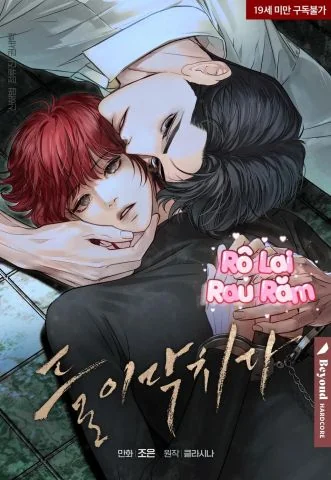
NGUY HIỂM CẬN KỀ – Main Plot and Review
NGUY HIỂM CẬN KỀ: A thrilling 18+ Đam Mỹ manhwa from Rô Lai team. Dive into action, revenge, and intense political intrigue with NGUY HIỂM CẬN KỀ.
|||
# NGUY HIỂM CẬN KỀ: A Masterclass in Political Intrigue, Raw Emotion, and Unyielding Revenge – A Deep Dive Review from JellyComics
## Introduction: The Phenomenon of NGUY HIỂM CẬN KỀ
In the saturated landscape of contemporary digital comics, very few titles manage to carve out a niche that is as distinct, as controversial, and as utterly compelling as NGUY HIỂM CẬN KỀ. This isn't just another **Đam Mỹ** (BoyLove) manhwa; it is a seismic event within the genre, meticulously crafted by the visionary **Rô Lai team**. From its very first chapters, NGUY HIỂM CẬN KỀ declared its intentions boldly, refusing to shy away from the darker, more brutal aspects of human nature and political machinations. It’s an explicit 18+ work, a designation it earns through its unflinching portrayal of violence, complex moral dilemmas, and deeply intense, often non-consensual, sexual themes.
The anticipation surrounding NGUY HIỂM CẬN KỀ was palpable long before its official release. Whispers circulated through online communities, fueled by enigmatic teasers from the **Rô Lai team** hinting at a narrative far more ambitious and gritty than typical **BoyLove** offerings. When it finally arrived, it didn’t just meet expectations; it shattered them, establishing itself as a benchmark for what a mature **Đam Mỹ** manhwa could achieve. This isn't a fluffy romance; it's a narrative that delves into the abyss of revenge, power, and the terrifying cost of survival in a dystopian world. The very title, NGUY HIỂM CẬN KỀ, translates to "Imminent Danger" or "Danger Is Near," perfectly encapsulating the constant state of peril that permeates every panel and every character interaction.
What sets NGUY HIỂM CẬN KỀ apart immediately is its audacious blend of genres. It’s a **Manhwa** that masterfully weaves together elements of **Phiêu Lưu** (Adventure), **Hành Động** (Action), and intense **Kịch Tính** (Drama/Suspense) with the foundational core of a **Đam Mỹ** narrative. This fusion creates a unique tapestry where high-stakes political intrigue, brutal military conflicts, and deeply personal emotional traumas collide, often violently. The series is not for the faint of heart, bearing explicit trigger warnings for violence, non-consensual acts, and other mature themes. Yet, it is precisely this uncompromising approach that has cemented its status among a dedicated readership seeking narratives that push boundaries and explore the raw, unvarnished facets of human experience.
NGUY HIỂM CẬN KỀ represents a significant evolution in the **Đam Mỹ** genre, demonstrating that **BoyLove** stories can be incredibly complex, emotionally devastating, and intellectually stimulating, all while maintaining their core appeal. The **Rô Lai team** has succeeded in creating a world that feels both fantastical in its dystopian setting and chillingly realistic in its portrayal of power dynamics and human desperation. It's a testament to their storytelling prowess that despite the heavy themes and dark undertones, readers remain utterly captivated, desperate to uncover the fate of its deeply flawed yet profoundly human characters. This deep dive aims to dissect every layer of this monumental work, from its intricate plot to its breathtaking artwork and its profound psychological underpinnings.
## In-Depth Plot Analysis & World Building of NGUY HIỂM CẬN KỀ
The narrative of NGUY HIỂM CẬN KỀ plunges readers headfirst into a chillingly plausible dystopian future: the 21st century nation of Hae Dong Mun, a suffocatingly authoritarian state under the iron fist of President Kwon Il Hyeok. This isn't just a backdrop; it's a living, breathing entity that dictates the very existence of its citizens, where dissent is met with swift, brutal punishment. The atmosphere is one of pervasive surveillance and suppressed rebellion, setting a grim stage for the unfolding drama. The initial chapters of NGUY HIỂM CẬN KỀ meticulously establish this oppressive environment, painting a picture of a society teetering on the edge of chaos, held together only by fear.
Our story begins with Jung Ryu Jin, a seemingly unassuming, low-ranking member of the "White Lion" (Bạch Sư Tử), a nascent anti-government organization. His initial characterization is that of a determined, though perhaps somewhat naive, young man driven by a profound personal tragedy: the public execution of his beloved older sister, Ryu Yeon Bi. Yeon Bi was not just Ryu Jin's sister; she was a celebrated idol, a symbol of hope, whose death was weaponized by the regime as a stark warning to anyone contemplating defiance. This traumatic event is the genesis of Ryu Jin's entire being in NGUY HIỂM CẬN KỀ, an unyielding scar that fuels his desperate quest for revenge. He embarks on a solo mission, a suicidal endeavor conceived more from raw grief and fury than tactical acumen, aimed at striking back against the system that stole his sister.
Predictably, Ryu Jin's desperate act fails spectacularly. He is apprehended by the elite "Wind Banner Squad" (Phong Kỳ Đội), the President's ruthless enforcers. This capture is the pivotal moment that catapults the plot of NGUY HIỂM CẬN KỀ into its true, intricate trajectory. His captor and the formidable leader of the Phong Kỳ Đội is Shin Hae Beom, a character introduced with an aura of chilling competence and unparalleled cruelty. Hae Beom is immediately established as a force of nature, a man devoid of overt sentimentality, whose actions are dictated solely by his own ambitious agenda. He is a predator in a world of prey, and Ryu Jin, bruised and broken, now finds himself entirely at his mercy.
The subsequent interactions between Ryu Jin and Shin Hae Beom are the narrative engine of NGUY HIỂM CẬN KỀ. Hae Beom is not just a torturer; he is a master manipulator. He sees in Ryu Jin not just a prisoner, but a tool, a weapon to be forged for his own grand designs. Hae Beom reveals his own deep-seated vendetta against the Kwon imperial family, the very same ruling dynasty responsible for Ryu Jin's sister's death and, as it turns out, the execution of Hae Beom's own parents. This shared tragedy forms a twisted, manipulative bond between them. Hae Beom's ambition is absolute: he intends to overthrow President Kwon Il Hyeok and dismantle the Kwon lineage entirely, erasing their dominion from Hae Dong Mun.
The core of Hae Beom’s proposition to Ryu Jin is a devil's bargain. He challenges Ryu Jin's narrow view of revenge, pointing out that the true architect of his suffering is not just the immediate executioner, but the entire tyrannical system embodied by the President. "The one you need to take revenge on isn't me," Hae Beom states, "but the President sitting comfortably on that throne." This revelation, jarring as it is, forces Ryu Jin to confront a larger, more complex enemy. Hae Beom manipulates Ryu Jin's grief and hatred, dangling the ultimate revenge as bait. He proposes a chilling alliance: Ryu Jin will betray the Bạch Sư Tử and cooperate with Hae Beom’s "Operation."
The objective of this "Operation" is as audacious as it is insidious: Ryu Jin is to infiltrate the inner circle of the Kwon family by seducing Prince Kwon Se Hyuk, the current heir apparent to the throne. The goal is not merely to assassinate the Prince, but to utterly destroy his life, to dismantle him piece by piece, both politically and personally. This mission requires Ryu Jin to become an agent of deceit, using his beauty and his desperate need for revenge as his primary weapons. This shift in the plot transforms NGUY HIỂM CẬN KỀ from a straightforward revenge tale into a high-stakes espionage thriller laced with psychological torment.
The world-building continues to unfold with meticulous detail. The political landscape of Hae Dong Mun is not merely black and white; there are layers of corruption, shifting loyalties, and hidden agendas. The Bạch Sư Tử, while ostensibly a force for good, is also revealed to be fragmented, perhaps even infiltrated. The Kwon imperial family itself is portrayed as a den of vipers, where power struggles and betrayals are common. NGUY HIỂM CẬN KỀ doesn't just tell a story; it immerses the reader in a fully realized, dangerous world where survival demands intelligence, adaptability, and an iron will. The tension is constant, deriving not just from physical threats but from the perpetual psychological warfare waged between characters, especially between Ryu Jin and Hae Beom. Every decision carries immense weight, every interaction is loaded with subtext, and every perceived ally could secretly be an enemy. The narrative structure, punctuated by moments of extreme brutality and unexpected vulnerability, ensures that readers are kept on edge, constantly questioning motives and anticipating the next twist in this intricate web of deceit and retribution. The complexity of the world in NGUY HIỂM CẬN KỀ is a testament to the **Rô Lai team's** commitment to crafting a truly immersive and unforgettable experience.
## Comprehensive Character Study
The true strength of NGUY HIỂM CẬN KỀ, beyond its gripping plot and stunning visuals, lies in its incredibly complex and deeply human characters. The **Rô Lai team** has masterfully crafted individuals who are not just archetypes but are products of their harsh environment, driven by profound traumas and conflicted desires.
### Protagonist Analysis: Jung Ryu Jin
Jung Ryu Jin is the beating heart of NGUY HIỂM CẬN KỀ, a character whose journey is a harrowing descent into darkness and a gradual, painful ascent towards a fragile form of self-actualization. His initial state is defined by an overwhelming grief and a singular, all-consuming thirst for revenge. The public execution of his sister, Ryu Yeon Bi, is the foundational trauma that shatters his world and molds his identity. This event strips him of his innocence, leaving him raw, vulnerable, yet fiercely determined.
Initially, Ryu Jin appears somewhat naive, embarking on a suicide mission fueled by emotion rather than strategy. He is driven by a visceral, almost instinctual need to inflict pain on those who caused his own. However, his capture by Shin Hae Beom marks the crucible of his transformation. Here, he is forced to confront not only physical torment but also profound psychological manipulation. Hae Beom's cynical pragmatism and calculated cruelty expose Ryu Jin to a brutal reality far beyond his initial understanding. This period of captivity forces Ryu Jin to shed his idealism and embrace a more ruthless, strategic mindset.
Ryu Jin's growth arc is one of the most compelling aspects of NGUY HIỂM CẬN KỀ. He evolves from a reactive, emotionally driven individual into a calculating, resilient survivor. The "Operation" to seduce and destroy Prince Kwon Se Hyuk demands an extraordinary level of deception and emotional compartmentalization. Ryu Jin must suppress his own pain and disgust, donning a mask of charm and vulnerability to manipulate his target. This constant performance takes an immense toll on his psyche. He grapples with the moral compromises he is forced to make, the blurring lines between acting and being, and the fear of losing himself entirely in the role.
His trauma isn't just a backstory; it's an ever-present force that shapes his decisions, his interactions, and his internal monologues. He frequently relives memories of his sister, her image serving as both his guiding star and his heaviest burden. The emotional scars manifest in moments of unexpected vulnerability, brief flashes of the sensitive young man he once was, juxtaposed against the hardened exterior he cultivates for survival. Ryu Jin’s struggle is profoundly human: how much of oneself can one sacrifice for a cause, for revenge, before there is nothing left? His journey is less about finding redemption and more about redefining what it means to survive and fight in a world where morality is a luxury. He learns to wield his body and his mind as weapons, becoming just as cunning and dangerous as his tormentor, Shin Hae Beom, in his own unique way. This nuanced portrayal makes Ryu Jin an unforgettable protagonist, a compelling blend of fragility and formidable strength.
### Antagonist/Side Character Analysis: Shin Hae Beom & Kwon Se Hyuk
Shin Hae Beom, the enigmatic leader of the Phong Kỳ Đội, is far more than a simple antagonist; he is a force of nature, a dark reflection of Ryu Jin's own desire for retribution. Hae Beom embodies ruthlessness and strategic genius, operating with an almost surgical precision. His primary motivation, like Ryu Jin's, stems from a deep-seated trauma: the execution of his own parents by the Kwon imperial family. This shared history, however, has forged two entirely different individuals. While Ryu Jin's revenge is initially fueled by raw emotion, Hae Beom's is cold, calculated, and devoid of visible sentiment. He is a man who has mastered the art of manipulation, seeing every person as a pawn and every situation as an opportunity to advance his grand plan to dismantle the Kwon dynasty.
Hae Beom's personality is a fascinating study in controlled ambition. He is charismatic yet terrifying, capable of both brutal violence and persuasive rhetoric. His intelligence is undeniable, evident in his intricate planning and his ability to exploit the weaknesses of others. He pushes Ryu Jin to his absolute limits, not out of sadistic pleasure alone, but because he believes that only through such tempering can Ryu Jin become the weapon he needs. Is he purely evil? NGUY HIỂM CẬN KỀ deliberately blurs these lines. While his methods are undeniably cruel, his ultimate goal – the overthrow of a tyrannical regime – could be seen as a twisted form of justice. He represents the chilling reality that in the pursuit of power and justice, one often must compromise their own humanity.
Prince Kwon Se Hyuk, the target of the "Operation," adds another layer of complexity to the narrative. Initially presented as a seemingly arrogant and privileged royal, he becomes a victim caught in a larger political game. His character arc is intricately tied to Ryu Jin's mission, and as Ryu Jin gets closer, the audience begins to see glimpses beyond the facade of royalty. Se Hyuk represents the corruption of power, but also perhaps the unwitting complicity of those born into it. His fate is tragic, designed to be a pawn sacrificed on the altar of revenge and ambition. The interaction between Ryu Jin and Se Hyuk adds significant emotional depth, forcing Ryu Jin to confront the human cost of his actions, even against someone he is supposed to despise.
Other notable side characters, such as the members of the Bạch Sư Tử and various figures within the Kwon regime, are meticulously drawn to enhance the world-building and demonstrate the pervasive nature of the conflict. They serve as mirrors, allies, or obstacles, each contributing to the rich tapestry of the narrative and reinforcing the high stakes of every interaction in NGUY HIỂM CẬN KỀ.
### Relationship Dynamics (Chemistry)
The heart of NGUY HIỂM CẬN KỀ's **Đam Mỹ** core lies in the tumultuous, often toxic, yet undeniably potent chemistry between Jung Ryu Jin and Shin Hae Beom. This isn't a conventional romance; it's a relationship born from manipulation, coercion, and a shared, albeit twisted, bond of revenge. Their dynamic is characterized by a constant power struggle, a push and pull between dominance and defiance.
From the outset, their relationship is established on unequal terms: captor and captive, manipulator and manipulated. Hae Beom exerts immense control over Ryu Jin, both physically and psychologically. He breaks Ryu Jin down, only to rebuild him into a tool for his own agenda. This inherent power imbalance forms the dark foundation of their interactions. However, as the story progresses, the dynamic subtly shifts. Ryu Jin, through his resilience and adaptability, begins to reclaim agency. He might still be under Hae Beom's command, but his spirit proves indomitable, and his strategic thinking starts to challenge Hae Beom in unexpected ways.
The **BoyLove** aspect of NGUY HIỂM CẬN KỀ is explicit and raw. Their intimacy is often entangled with violence and non-consensual acts, reflecting the harsh realities of their world and the transactional nature of their early connection. These scenes are not romanticized; they are portrayed with a stark, unsettling realism that emphasizes the characters' trauma and the complex power dynamics at play. Yet, within this darkness, glimmers of something more profound begin to emerge. Moments of unexpected vulnerability from Hae Beom, or instances where Ryu Jin's defiance sparks a different kind of respect from his captor, hint at an evolving connection.
Their chemistry is less about tenderness and more about intensity. It's a magnetic pull between two damaged individuals who, despite their antagonistic origins, find themselves inextricably linked by fate and shared purpose. Their relationship is a psychological battleground, rife with suspicion, betrayal, and a deep, unsettling fascination. It's a testament to the **Rô Lai team's** storytelling that they manage to weave such a compelling and emotionally charged connection out of such dark beginnings. This complex, often disturbing, yet utterly captivating dynamic is what hooks many readers, eager to see how such a volatile relationship can possibly develop, or if it will ultimately consume them both. The themes of "Yêu hận" (Love-Hate) and "Hợp đồng" (Contract) are central to their bond, exploring the uncomfortable spaces where survival, revenge, and burgeoning emotions intersect.
## Artistic Review: The Visual Mastery of NGUY HIỂM CẬN KỀ
The visual storytelling of NGUY HIỂM CẬN KỀ is nothing short of exceptional, a critical pillar supporting its complex narrative and intense emotional landscape. The **Rô Lai team** demonstrates a profound understanding of how art can amplify themes, convey unspoken emotions, and immerse the reader completely in a dystopian world. Every element, from the delicate line work to the dramatic shading, is executed with microscopic precision, contributing to the overall impact of this powerful **Manhwa**.
The **line work** in NGUY HIỂM CẬN KỀ is a masterclass in versatility. In action sequences, lines are sharp, dynamic, and fluid, conveying rapid movement and brutal impact with visceral clarity. During moments of intense psychological drama, the lines become more nuanced, with delicate strokes around facial features to emphasize subtle shifts in emotion – a tremor in the lip, a furrow in the brow, the unspoken agony in a character's eyes. Character outlines are clean and defined, giving a sense of solidity and presence, while background details are rendered with enough precision to establish the setting without overwhelming the foreground. The precision of the lines in military uniforms, the intricate details of architectural designs, or the delicate textures of fabric all speak to a commitment to visual excellence.
**Shading** is employed with dramatic effect, often utilizing chiaroscuro techniques to heighten tension and mood. Dark, heavy shadows are frequently used to cloak characters in mystery, suggest danger, or emphasize their internal struggles. The interplay of light and shadow creates a palpable sense of atmosphere, particularly in clandestine meetings, dimly lit torture chambers, or opulent, yet oppressive, palace interiors. Soft gradients are reserved for moments of vulnerability or introspection, allowing the reader to connect with the characters on a deeper, more empathetic level. The use of shadow to obscure parts of a character’s face can convey hidden motives or suppressed emotions, making every panel a visual puzzle for the reader to decipher.
The **color palette** of NGUY HIỂM CẬN KỀ is predominantly desaturated, dominated by a grim spectrum of grays, muted blues, and earthy browns, which effectively establishes the oppressive, militaristic tone of Hae Dong Mun. However, strategic splashes of vibrant color are used with powerful symbolic intent. Red, in particular, is employed to signify violence, passion, blood, or danger, often appearing as a stark contrast against the muted backdrop. The deep, rich reds of blood or the unsettling glow of emergency lights serve as visual shockwaves. Gold and opulent jewel tones might appear in scenes involving the imperial family, highlighting their decadent yet fragile power. This careful use of color not only adds aesthetic appeal but also reinforces narrative themes and emotional states.
**Panel flow** and composition are expertly handled, guiding the reader's eye seamlessly through the narrative. Action sequences often feature dynamic, diagonal panels and overlapping frames to convey speed and chaos. Conversely, moments of psychological tension or introspection utilize wider, more deliberate panels, sometimes with stark, empty spaces, to emphasize isolation or the weight of a silent decision. Close-ups on characters' faces are frequent, allowing for an intimate connection with their emotional turmoil, while wide shots establish the grandeur and scale of the dystopian world. Splash pages are used sparingly but effectively, typically for impactful reveals, climactic action, or moments of profound emotional resonance, leaving a lasting impression.
The **character design** in NGUY HIỂM CẬN KỀ is distinctive and highly expressive. Jung Ryu Jin's design evolves with his character arc: initially conveying a more innocent, albeit resolute, demeanor, he gradually develops a hardened edge, his eyes betraying a deeper understanding of the world's cruelty. Shin Hae Beom's design perfectly embodies his ruthless efficiency – sharp, angular features, an imposing physique, and a gaze that can be both piercing and chillingly indifferent. Every character's body language, posture, and facial expressions are meticulously drawn to convey complex inner states, from fear and anger to hidden vulnerability and cunning calculation. The attention to detail in their attire, from military uniforms to casual wear, further grounds them in the story's setting.
Finally, the **backgrounds** are not mere filler but active participants in the world-building. Military compounds are rendered with stark, industrial detail, emphasizing their functionality and oppressive nature. Opulent palaces of the Kwon family are adorned with intricate, albeit cold, architectural details that speak to their wealth and power, contrasting sharply with the bleakness outside their walls. Seedy hideouts and the ravaged landscapes outside the capital add to the sense of a nation in turmoil. This microscopic attention to visual detail elevates NGUY HIỂM CẬN KỀ beyond a mere story, transforming it into an immersive, sensory experience that resonates deeply with its audience.
## Why NGUY HIỂM CẬN KỀ Stands Out: A Comparative Analysis
NGUY HIỂM CẬN KỀ is a unique beast within the **Manhwa** landscape, especially within the **Đam Mỹ** and **BoyLove** genres. While there are countless titles exploring themes of romance, revenge, and power dynamics, NGUY HIỂM CẬN KỀ distinguishes itself through its audacious blend of high-stakes political intrigue, raw brutality, and profound psychological depth. It doesn't just dabble in these elements; it fully commits to them, crafting a narrative that feels both epic in scale and intensely personal.
Compared to other 18+ **Đam Mỹ** titles that focus primarily on the relationship dynamics and explicit scenes, NGUY HIỂM CẬN KỀ elevates its narrative by grounding its personal conflicts within a meticulously constructed dystopian political thriller. Many contemporary **BoyLove** works, such as "Jinx" or "Painter of the Night," excel at exploring complex, often dark, power dynamics and the intricacies of human relationships. "Jinx," for instance, delves into a highly toxic and physically demanding relationship driven by debt and desire. "Painter of the Night," while set in a historical context, similarly explores themes of obsession, class difference, and a master-servant dynamic with significant power imbalances and explicit content.
However, NGUY HIỂM CẬN KỀ broadens this scope significantly. While it shares the 18+ rating and features intense, often non-consensual sexual acts that are common in these darker **Đam Mỹ** subgenres, its primary thrust isn't *just* the relationship. The central romantic/sexual entanglement between Ryu Jin and Hae Beom is inextricably linked to, and indeed born from, a larger political game of revenge, betrayal, and revolution. The personal stakes are always magnified by the national implications of their actions. This deep integration of political machinations sets it apart. The characters' relationship is a tool, a weapon, a consequence, and ultimately, perhaps a twisted form of salvation, all within the context of a crumbling authoritarian state.
Furthermore, the level of **world-building** in NGUY HIỂM CẬN KỀ is far more expansive and detailed than many of its counterparts. Instead of confining the drama to personal spaces or small social circles, the **Rô Lai team** presents a fully realized, oppressive dictatorship with its own history, military structure (Phong Kỳ Đội), rebel organizations (Bạch Sư Tử), and internal power struggles within the ruling family. This comprehensive backdrop makes the character's struggles feel more significant, more perilous, and more rooted in a plausible, albeit fictional, reality. The sense of **Phiêu Lưu** (Adventure) and **Hành Động** (Action) is not just incidental; it is integral to the plot, featuring military operations, infiltration missions, and high-stakes confrontations that are often absent or less central in relationship-focused **Đam Mỹ** comics.
The psychological depth given to the protagonist, Jung Ryu Jin, is also a distinguishing feature. His trauma, his internal conflicts, and his gradual transformation from a naive avenger to a hardened survivor are explored with unflinching detail, going beyond surface-level characterization often found in genre works. This nuanced exploration of human resilience and moral ambiguity in the face of extreme duress gives NGUY HIỂM CẬN KỀ an intellectual heft that few **BoyLove** **Manhwa** achieve. It's a series that demands its readers engage not just with its explicit content, but with its profound questions about power, justice, and the cost of revenge. It stands as a testament to the fact that **Đam Mỹ** can be a vehicle for truly ambitious and thought-provoking storytelling, venturing into territories of political thrillers and psychological dramas with remarkable success.
## FAQ: Everything You Need to Know about NGUY HIỂM CẬN KỀ
### H3: What makes NGUY HIỂM CẬN KỀ unique in the crowded Manhwa landscape?
NGUY HIỂM CẬN KỀ stands out due to its bold fusion of genres: a deeply intricate political thriller, an intense action and adventure narrative, and a dark, explicit 18+ **Đam Mỹ** (BoyLove) story. Unlike many **BoyLove** **Manhwa** that focus solely on character relationships, NGUY HIỂM CẬN KỀ grounds its intimate dynamics within a sprawling, oppressive dystopian world, making every personal conflict resonate with national implications. The **Rô Lai team** has crafted a narrative with high-stakes political intrigue, military action, and profound psychological character development, pushing the boundaries of what a **Manhwa** can achieve.
### H3: What are the primary trigger warnings for NGUY HIỂM CẬN KỀ?
It is crucial to be aware that NGUY HIỂM CẬN KỀ is an 18+ title and contains mature themes that can be disturbing for some readers. The **Manhwa** explicitly features descriptions and depictions of violence, sexual assault (including non-consensual acts and gang rape), murder, abuse, and drug use. The narrative does not shy away from the brutality of its dystopian setting. Readers are strongly advised to exercise caution and consider these warnings before delving into the series.
### H3: Is NGUY HIỂM CẬN KỀ suitable for new readers to the BoyLove/Đam Mỹ genre?
Given its extremely dark themes, explicit content, and the pervasive nature of its trigger warnings, NGUY HIỂM CẬN KỀ is **not recommended** for newcomers to the **BoyLove** or **Đam Mỹ** genres. It is an intense, emotionally challenging, and graphically explicit work that may be overwhelming for those unfamiliar with the genre's darker subgenres. It is best suited for experienced readers who are comfortable with mature content, moral ambiguity, and complex, often non-consensual, relationship dynamics.
### H3: How important is the political aspect in NGUY HIỂM CẬN KỀ compared to the romance?
The political aspect in NGUY HIỂM CẬN KỀ is not merely a backdrop; it is intrinsically woven into the very fabric of the narrative and is arguably as, if not more, important than the explicit romance. The core plot revolves around a military dictatorship, a rebel organization, and a grand scheme of political revenge and revolution. The relationship between the main characters, while central to the **Đam Mỹ** genre, is often a product of, and a tool within, this larger political game. Their personal struggles and developing bond are consistently shaped by the high-stakes political environment of Hae Dong Mun.
### H3: Where can I legally read NGUY HIỂM CẬN KỀ and support the Rô Lai team?
To legally read NGUY HIỂM CẬN KỀ and directly support the talented **Rô Lai team**, you should access it through official platforms. JellyComics is a proud partner in bringing this intense **Manhwa** to readers. Always opt for official channels to ensure the creators are compensated for their incredible work and to access the highest quality translations and artwork. Following the **Rô Lai team**'s social media (like their Facebook page Rô lai team 2.0) is also a great way to stay updated on new chapters and related projects.
## Final Verdict: Why You Must Read It at JellyComics
NGUY HIỂM CẬN KỀ is not merely a comic; it is an experience, a visceral journey into the darkest corners of human ambition, trauma, and the unyielding pursuit of revenge. From its meticulously crafted dystopian world to its profoundly complex characters and breathtakingly detailed art, this **Manhwa** from the **Rô Lai team** stands as a monumental achievement in the **Đam Mỹ** genre and beyond. It challenges perceptions, provokes thought, and dares to explore themes that many shy away from, making it an unforgettable read for those brave enough to dive in.
The relentless pace of its **Hành Động** sequences, the gripping tension of its **Kịch Tính** plot, and the emotional resonance of its characters’ struggles create a narrative tapestry that is both brutal and beautiful. Jung Ryu Jin's harrowing psychological journey, Shin Hae Beom's chilling charisma, and their volatile, magnetic relationship are etched into the reader's memory long after the final panel. The microscopic attention to detail in the art, from the expressive line work to the symbolic use of color, ensures that every page is a feast for the eyes, enhancing the storytelling with unparalleled visual mastery.
At JellyComics, we are committed to bringing you the most impactful and compelling stories, and NGUY HIỂM CẬN KỀ is undoubtedly one of them. It's a title that transcends typical genre boundaries, offering a rich blend of **Phiêu Lưu**, political intrigue, and raw emotional depth that appeals to a wide audience seeking mature, thought-provoking content. If you are a seasoned reader of 18+ **Đam Mỹ** who appreciates nuanced character development, intricate world-building, and an unflinching exploration of dark themes, then NGUY HIỂM CẬN KỀ is an absolute must-read.
Embark on this dangerous journey. Witness the power of a story that refuses to compromise. Experience the intense drama, the heart-pounding action, and the psychologically complex romance that define NGUY HIỂM CẬN KỀ. Visit JellyComics today and immerse yourself in this unparalleled masterpiece. You won't regret entering the world where danger is truly imminent.
Frequently Asked Questions about NGUY HIỂM CẬN KỀ
What genre is NGUY HIỂM CẬN KỀ? Generally, NGUY HIỂM CẬN KỀ falls under the various genres category, featuring a storyline focused on character emotions and engaging plot twists.
Why should you read NGUY HIỂM CẬN KỀ? If you enjoy stories with emotional depth, well-developed characters, and unexpected turns, NGUY HIỂM CẬN KỀ is definitely a great choice.
Who is NGUY HIỂM CẬN KỀ suitable for? Depending on the specific arc, NGUY HIỂM CẬN KỀ can be suitable for both newcomers and long-time fans of this genre.
If you love NGUY HIỂM CẬN KỀ, don’t forget to check out similar series at Truyện tranh 18+.
To explore more reviews and perspectives on NGUY HIỂM CẬN KỀ, you can refer to https://jellycomics.com/nhom-dich/jellycomics/.
Jelly Comics (JC) là trang web truyện tranh hàng đầu dành cho những người đam mê truyện tranh. Với một bộ sưu tập đa dạng và phong phú, trang web đem đến cho bạn những giờ phút giải trí tuyệt vời và một trải nghiệm truyện tranh hoàn toàn miễn phí. Nếu bạn là một fan hâm mộ truyện tranh, hãy đến với JC để khám phá thế giới truyện tranh không giới hạn!Hãy truy cập vào Jelly Comics ngay hôm nay để khám phá thế giới truyện tranh đa dạng và thú vị. Là điểm đến lý tưởng cho những bạn đam mê truyện tranh và muốn khám phá thế giới đa dạng và thú vị của truyện tranh miễn phí. Thế giới truyện tranh đang chờ bạn khám phá!
Chapter 53
Chapter 52
Chapter 51
Chapter 50
Chapter 49
Chapter 48
Chapter 47
Chapter 46
Chapter 45
Chapter 44
Chapter 43
Chapter 42
Chapter 41
Chapter 40
Chapter 39
Chapter 38
Chapter 37
Chapter 36
Chapter 35
Chapter 34
Chapter 33
Chapter 32
Chapter 31
Chapter 30
Chapter 29 H++
Chapter 28
Chapter 27
Chapter 26
Chapter 25
Chapter 24
Chapter 23
Chapter 22
Chapter 21
Chapter 20
Chapter 19
Chapter 18 NGANG RAW
Chapter 17
Chapter 16
Chapter 15
Chapter 14
Chapter 13
Chapter 12
Chapter 11 NGANG RAW
Chapter 10
Chapter 9
Chapter 8
Chapter 7
Chapter 6
Chapter 5
Chapter 4
Chapter 3
Chapter 2
Chapter 1
Chapter 0.1 Giới thiệu 2/3
Chapter 0 Preview


