- Tên khác: Laid-Back Yuri, Yuri Thư Giãn
- Tác giả: Namori
- Nhóm Dịch: Jellycomics ©
- Thể loại: Girls Love, JELLYCOMICS ©, RAW, School, Slice of Life
- Thẻ: comedy manga, cute girls doing cute things, middle school girls manga, Namori, Slice of Life manga, Yuri manga, Yuru Yuri
- Trạng thái: OnGoing
- Ngày thêm: 01/30/2026
- Tổng lượt xem: 27
Yuru Yuri by author Namori is a manga series that has garnered significant attention. The following article provides a detailed overview of the plot, setting, and why Yuru Yuri is worth adding to your reading list.
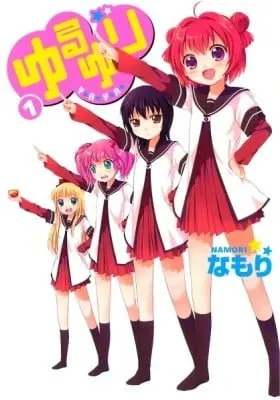
Yuru Yuri – Main Plot and Review
Discover "Yuru Yuri": a deep dive into its unique comedy, unforgettable characters, and groundbreaking slice-of-life charm.
|||
# Unpacking the Enduring Appeal: A Deep Dive Review into the Phenomenon of Yuru Yuri
## Introduction: The Phenomenon of Yuru Yuri
From the moment the initial chapters graced the pages of Comic Yuri Hime, *Yuru Yuri* has been more than just another manga; it has been a cultural touchstone, a beacon of unadulterated comedic joy, and a subtle yet significant force in shaping the contemporary landscape of slice-of-life and "cute girls doing cute things" (CGDCT) narratives. Created by the undeniably talented Namori, *Yuru Yuri* burst onto the scene with a premise that, on the surface, seemed disarmingly simple: a group of middle school girls taking over an abandoned clubroom and indulging in various forms of leisurely, often nonsensical, amusement. Yet, beneath this veneer of simplicity lay a meticulously crafted comedic engine, fueled by sharp character writing, brilliantly executed running gags, and a unique self-awareness that often bordered on meta-commentary.
The very title, *Yuru Yuri*, itself suggests a relaxed, "yuru-yuru" (ゆるゆる – loose, gentle, easygoing) approach to the "yuri" (百合 – girls' love) genre, hinting at the series' characteristic blend of implied romantic undertones with an overriding commitment to lighthearted, platonic camaraderie. This delicate balance is precisely what has allowed *Yuru Yuri* to transcend simple genre classification, appealing to a broad spectrum of readers who appreciate both its innocent charm and its playful subversion of expectations. The manga's immediate success led to multiple anime adaptations, ONA (Original Net Animation) series, and even stage plays, cementing its status as a multi-media phenomenon and embedding its memorable characters firmly within the collective consciousness of anime and manga fandom. It's a testament to Namori's vision that a series seemingly devoid of high stakes or dramatic conflict could garner such a passionate following, demonstrating the profound power of character-driven humor and the comforting appeal of everyday adventures. Its legacy is not just in its individual merits but in its contribution to defining the modern iteration of the schoolgirl slice-of-life, influencing countless subsequent works while maintaining its own distinct and inimitable flavor. This introduction merely scratches the surface of what makes *Yuru Yuri* such a compelling, enduring, and endlessly re-readable work, preparing us for a deeper expedition into its intricate comedic tapestry and the profound simplicity of its charm.
## In-Depth Plot Analysis & World Building of Yuru Yuri
*Yuru Yuri*'s "plot" is, in itself, a fascinating study in narrative deconstruction. Unlike traditional stories driven by overarching conflicts, character-defining quests, or looming external threats, *Yuru Yuri* thrives on the antithesis of these elements. Its narrative arc is less a trajectory and more a gentle, meandering river, flowing through the everyday lives of its core quartet—Akari Akaza, Kyoko Toshino, Yui Funami, and Chinatsu Yoshikawa—alongside their ever-expanding circle of friends and acquaintances. The central conceit revolves around the "Amusement Club," a self-proclaimed haven of leisure established by Kyoko and Yui in an abandoned traditional tea ceremony clubroom. This clubroom itself becomes a character, a focal point for countless gags, heart-to-heart conversations, and the general shenanigans that define the series.
The "world-building" of *Yuru Yuri* is meticulously crafted through its deliberate normalcy. The setting is a quintessential Japanese middle school, Nanamori Middle School, complete with familiar classrooms, a bustling cafeteria, a serene rooftop, and the oft-feared student council office. Yet, within this mundane backdrop, Namori introduces subtle, fantastical elements that serve to amplify the comedy rather than disrupt the realism. For instance, Kyoko's supernatural energy levels, Akari's perpetual struggle with visibility, or the uncanny accuracy of Chinatsu's bizarre drawings are not questioned by the characters; they are simply accepted as part of their reality, creating a whimsical logic that underpins the humor. The pace is deliberately leisurely, a "yuru-yuru" pace that allows moments to breathe, jokes to land with precision, and character interactions to unfold organically. Each chapter or episode typically presents a self-contained vignette, often exploring a mundane activity—studying for exams, going to a summer festival, visiting a theme park, celebrating a birthday, or simply idling away an afternoon in the clubroom.
A hallmark of *Yuru Yuri*'s narrative structure is its reliance on **running gags**, which are not merely repeated but evolve, gain layers, and occasionally twist expectations. Akari's "Akarin!" opening and subsequent fade into obscurity is the most iconic example, yet it's far from the only one. Kyoko's obsession with rum raisin ice cream and *Mirakurun*, Chinatsu's bizarre fixation on Yui and her unsettling drawing style, Ayano's tsundere affections for Kyoko, Sakurako's constant vying for Himawari's attention (and breasts), and Chitose's yuri-induced nosebleeds are all integral threads woven into the fabric of the series. These gags aren't just repetitive; they serve as shorthand for character traits, reinforce relationships, and provide a comfortable familiarity for the audience, inviting them into an inside joke that grows funnier with each iteration. The genius lies in how Namori subtly escalates or subverts these gags, ensuring they never grow stale, often adding unexpected layers or breaking the fourth wall to acknowledge their own comedic function.
The narrative also subtly plays with the concept of **"yuri" or girls' love**. While never explicit, the romantic undertones, unrequited crushes, and intense affections among the girls are a constant source of humor and character development. Ayano's painfully obvious crush on Kyoko, Chinatsu's obsessive adoration of Yui, and the tumultuous, bickering romance between Sakurako and Himawari are not just background noise; they are central to the characters' motivations and the comedic setups. Namori masterfully uses these relationships to generate awkward situations, misunderstandings, and heartwarming moments, all without ever committing to a definitive romantic outcome, preserving the "yuru" aspect of the "yuri." This ambiguity allows for both shipping fodder and appreciation for their deep, if sometimes complicated, friendships.
The episodic nature of *Yuru Yuri* allows for an incredible breadth of scenarios, from school sports festivals and class trips to sleepovers and mundane trips to the convenience store. Each scenario is approached with an infectious enthusiasm and an unwavering commitment to comedic timing. There are no major villains or looming threats, but rather the everyday challenges of adolescence: academic struggles, social anxieties (often played for laughs), and the existential dread of boredom. The "plot" is simply the unfolding of these daily lives, rendered with such affection and humor that it becomes immensely engaging. The world of *Yuru Yuri* is one where the greatest drama is whether Kyoko will finish her homework on time, or if Akari will finally be noticed by her peers, transforming the mundane into the magnificent. This consistent commitment to lightheartedness, coupled with deep character understanding, allows *Yuru Yuri* to maintain its vibrant energy across countless chapters and episodes, making its "plot" a celebration of life's small joys and comedic absurdities, rather than a race towards a climactic conclusion.
## Comprehensive Character Study
The heart and soul of *Yuru Yuri* undeniably lie in its rich, diverse, and meticulously developed cast of characters. Each girl, from the main quartet to the expansive supporting ensemble, is imbued with distinct personalities, quirks, and intricate relational dynamics that elevate the series beyond a simple gag manga. Namori’s genius is evident in the way these characters interact, creating a vibrant ecosystem of humor, affection, and gentle conflict.
### Protagonist Analysis: Akari Akaza
Akari Akaza, affectionately known as "Akarin," is ostensibly the protagonist of *Yuru Yuri*, yet her status is constantly, hilariously, and sometimes poignantly subverted. Her defining trait is her inexplicable lack of presence, often fading into the background, being forgotten, or having her lines overlooked. This isn't merely a running gag; it's the core of her character's internal struggle and growth arc, however subtle it may be in a slice-of-life comedy.
**Akari's Psyche:** At her core, Akari is an earnest, sweet, and genuinely kind-hearted girl. She wants nothing more than to be a vibrant, integral part of the Amusement Club and to be noticed by her friends. Her internal world is one of quiet longing. There's a subtle, almost existential "trauma" embedded in her character: the constant, mild pain of invisibility. It's not a dramatic, tear-jerking trauma, but a continuous, low-level disappointment. Imagine always being just outside the spotlight, always being the forgotten detail, always having your efforts overlooked. This manifests in her frequent "Akarin!" introduction, a desperate plea for recognition that is almost immediately undermined, often by her own friends. She desires to contribute, to be relevant, to have a strong presence, but fate (and Namori's comedic writing) consistently conspires against her. Her cheerful demeanor often masks this underlying wistfulness. She's remarkably resilient, always bouncing back with a smile, but there are fleeting moments where her genuine sadness at being overlooked shines through, making her incredibly relatable. She often overthinks her interactions, wondering if she's said the right thing or if her presence is truly desired, which is a common adolescent insecurity amplified to comedic proportions.
**Akari's Trauma (Interpreted):** While "trauma" in the clinical sense might be too strong for a character in *Yuru Yuri*, for Akari, her perpetual invisibility can be seen as a form of comedic, low-stakes psychological distress. It's the micro-aggression of being consistently forgotten. Her "Akarin!" mantra is less a character quirk and more a coping mechanism, a ritualized attempt to assert her existence in a world that often overlooks her. Her inability to "be seen" creates a unique internal conflict: how does one find self-worth when external validation is constantly denied? This creates a melancholic undercurrent to her otherwise cheerful disposition, making her character surprisingly deep for a gag manga. She represents the universal feeling of being secondary, of wanting to stand out but struggling to do so.
**Akari's Growth Arc:** Akari's growth isn't about overcoming a grand challenge; it's about subtle self-acceptance and a gradual redefinition of her own importance. Initially, she actively fights against her invisibility, trying various tactics to stand out, often to no avail. Over time, however, there's a slow shift. She begins to embrace her unique role, almost becoming the "invisible glue" that holds the group together. Her moments of genuine insight or unexpected competence, while rare, feel more impactful precisely because of her usual background status. Her "growth" is in finding her own unique value proposition, realizing that even if she isn't the flashy center of attention like Kyoko, or the calm anchor like Yui, her quiet presence and genuine kindness are irreplaceable to her friends. She stops striving so hard for conventional "protagonist" status and, in doing so, ironically becomes more endearing and, in her own subtle way, indispensable. Her growth is learning to be content with being Akari, "Akarin," even if it means an occasional fade-out.
### Antagonist/Side Character Analysis
*Yuru Yuri* operates without traditional antagonists. Instead, the "antagonistic" elements often come from exaggerated character flaws, misunderstandings, or the sheer force of others' personalities. The true strength of the series, beyond Akari, lies in its incredibly vibrant and well-defined supporting cast, who each could easily lead their own spin-off.
* **Kyoko Toshino:** The charismatic, irresponsible, and endlessly energetic leader of the Amusement Club. Kyoko is the engine of the series, a whirlwind of ideas, pranks, and a shocking academic brilliance she only deploys at the last possible second. Her psyche is one of pure id: impulsive, fun-loving, and driven by immediate gratification (often involving rum raisin ice cream or *Mirakurun*). She thrives on attention and enjoys being the center of chaos. Beneath the surface, however, there’s a genuine affection for her friends, especially Yui, and a hidden vulnerability. Her "trauma" might be the subtle loneliness of being a natural leader who sometimes struggles with deeper emotional connections, or the fear of failing to live up to her own boundless energy. Her "growth" is learning to temper her impulsiveness, occasionally showing maturity, and recognizing the quiet importance of her friends' stability.
* **Yui Funami:** The calm, collected, and eminently sensible counterbalance to Kyoko's exuberance. Yui is the stoic anchor of the group, often serving as the straight man to the others' antics. Her psyche is pragmatic and caring, but also possesses a dry wit and a hidden playful side. She has a deep, almost maternal affection for Kyoko, frequently cleaning up her messes and offering unwavering support. Her "trauma" could be interpreted as the burden of constant responsibility, being the one who always has to be the adult in the room, which can be isolating. Her "growth" is in learning to let loose more, to indulge in fun, and to openly express her feelings, particularly towards Kyoko and Chinatsu, showing that even the most composed individuals can find joy in vulnerability.
* **Chinatsu Yoshikawa:** The seemingly innocent, pink-haired girl who is anything but. Chinatsu is manipulative, possessive, and harbours a terrifyingly obsessive crush on Yui, often expressed through disturbing drawings or forced affection. Her psyche is a fascinating blend of adorable outward appearance and deeply unsettling internal desires. She wants to be cute and loved, but her methods are often twisted. Her "trauma" might be an insecurity about her own appeal, leading her to overcompensate with aggressive "cuteness" and possessiveness. Her "growth" is subtly learning to navigate her strong emotions in a more socially acceptable manner, or at least becoming more self-aware of her own eccentricities, making her attempts at manipulation more transparent and comedic.
* **Toshino Kyoko (Student Council):** While a side character, Akari's older sister is a prominent force. A kind, responsible, and somewhat naive individual, she often finds herself unwittingly embroiled in the Amusement Club's escapades. Her psyche is one of gentle authority tempered by a deep affection for Akari and a slightly flustered nature. She tries to enforce rules but often succumbs to the girls' charm.
* **Ayano Sugiura:** The perpetually flustered tsundere of the student council, harboring a painfully obvious yet unacknowledged crush on Kyoko. Ayano's psyche is a battlefield of conflicting emotions: stern responsibility versus intense, unspoken longing. She's diligent and serious, but utterly collapses into a blushing mess whenever Kyoko is involved. Her "trauma" is the agony of unrequited love and the fear of vulnerability, manifested in her inability to confess. Her "growth" is in slowly, painstakingly, showing more moments of genuine affection and less antagonism towards Kyoko, signaling a gradual acceptance of her feelings.
* **Chitose Ikeda:** Ayano's best friend and fellow student council member, renowned for her yuri-induced nosebleeds and vivid fantasies about Ayano and Kyoko. Chitose is the ultimate shipping fan, her psyche completely engrossed in the romantic tension between her friends. Her "trauma" might be a subtle form of escapism, finding more joy in imagined romances than in her own daily life. Her "growth" is consistent in her role as a hilarious observer, providing meta-commentary on the yuri aspects of the series.
* **Sakurako Oomuro:** A boisterous, lazy, and somewhat dim-witted member of the student council, locked in a perpetual rivalry (and undeniable affection) with Himawari. Her psyche is one of carefree impulsiveness, driven by a desire for attention and an aversion to responsibility. She's blunt and often thoughtless, but possesses a genuine warmth. Her "trauma" could be an underlying insecurity about her intelligence, leading her to act out. Her "growth" is often tied to her evolving relationship with Himawari, slowly revealing deeper layers of care beneath their constant bickering.
* **Himawari Furutani:** The intelligent, mature, and perpetually exasperated foil to Sakurako. Himawari is responsible and studious, but also prone to snapping at Sakurako, a clear sign of her deep, if complex, feelings for her. Her psyche is one of practicality and quiet competence, constantly managing Sakurako's chaos. Her "trauma" could be the exhaustion of constantly being the responsible one, or the fear of fully embracing her "yuri" feelings. Her "growth" is in acknowledging her bond with Sakurako, even as she complains about it, and allowing herself moments of vulnerability and humor.
These characters are not static; they subtly evolve, their relationships deepen, and their individual quirks become more defined, making *Yuru Yuri*'s world feel incredibly alive and endlessly entertaining.
### Relationship Dynamics (Chemistry)
The intricate web of relationships in *Yuru Yuri* is arguably the most compelling aspect of its narrative. The "chemistry" between the characters is palpable, spanning the spectrum from deep platonic friendship to overt, yet often unrequited, romantic affection, creating a rich tapestry of human connection that underpins all the comedy. The series masterfully explores the nuances of "yuri" (girls' love) without ever explicitly crossing the line into definitive romantic declarations, maintaining its characteristic "yuru" (relaxed) approach.
* **The Main Quartet (Kyoko, Yui, Akari, Chinatsu):**
* **Kyoko & Yui:** This is the foundational relationship of the series. Their bond is one of long-standing friendship, mutual understanding, and unwavering support. Kyoko's boundless energy is tempered by Yui's calm wisdom, and Yui's stoicism is often broken by Kyoko's infectious enthusiasm. Their dynamic is almost like an old married couple – Yui is constantly cleaning up Kyoko's messes, but there's an undeniable, deep affection that transcends mere friendship. There are strong "yuri" undertones here, implied through their shared history, their comfort with each other, and Yui’s subtle reactions to Kyoko’s antics. This relationship provides the emotional core of the Amusement Club, anchoring the more chaotic elements. They understand each other without words, sharing glances and unspoken agreements that speak volumes about their profound connection. Their chemistry is natural, fluid, and profoundly heartwarming, serving as the bedrock upon which the rest of the group's dynamics are built.
* **Chinatsu & Yui:** Chinatsu's obsessive crush on Yui is a major source of comedy and mild discomfort. Chinatsu idolizes Yui, viewing her through rose-tinted, somewhat distorted, glasses. Her attempts at affection are often awkward, creepy, or overly aggressive, much to Yui's perpetual bewilderment and occasional fear. Yui, for her part, tolerates Chinatsu with a mix of patience and resignation, sometimes showing genuine kindness, sometimes a quiet exasperation. This dynamic highlights the comedic potential of unrequited, intense affection and the awkwardness of navigating such strong feelings within a group of friends. The disparity in their feelings is the engine of their interactions, creating a unique comedic tension.
* **Akari & Chinatsu:** Akari often finds herself as Chinatsu's unwilling target for unwanted affection, or as an experiment for Chinatsu's bizarre artistic endeavors. Akari, being Akari, usually accepts these interactions with good-natured confusion, though sometimes a flicker of exasperation shines through. Their relationship is less about deep emotional connection and more about shared comedic predicaments, with Akari often suffering the brunt of Chinatsu's eccentricities.
* **Akari & Kyoko:** Kyoko, despite her high energy, is surprisingly oblivious to Akari's struggle for recognition, often being one of the main culprits behind her invisibility. However, there are moments where Kyoko shows genuine, if fleeting, care for Akari, often when Akari is truly down. It's a relationship of casual friendship, with Kyoko often sweeping Akari into her schemes, inadvertently providing Akari with opportunities for interaction, even if her presence is overlooked.
* **The Student Council (Ayano, Chitose, Sakurako, Himawari):** This group, initially presented as a foil to the Amusement Club, quickly develops its own intricate and equally hilarious set of dynamics.
* **Ayano & Kyoko:** This is the most explicit "yuri" relationship in the series, albeit one-sided and unacknowledged by Kyoko. Ayano's fierce tsundere facade barely conceals her intense crush on Kyoko. Her constant bickering and attempts to maintain a dignified distance are repeatedly undermined by her blushing, stammering reactions whenever Kyoko is near or shows her any attention. Kyoko, oblivious and playful, often teases Ayano without realizing the profound effect she has. Their chemistry is built on this delicious comedic tension, the "will they/won't they" that never actually resolves, but continually generates laughter and heartwarming moments. Chitose's observation of their dynamic adds another layer of meta-humor.
* **Sakurako & Himawari:** Another flagship "yuri" pairing, characterized by constant bickering, competitive jabs, and an underlying current of deep affection. Their relationship is a classic "enemies-to-lovers" trope, but stuck in the "enemies" phase, with the "lovers" aspect playfully implied. Sakurako's laziness and impudence clash with Himawari's diligence and maturity, leading to endless arguments about breasts, grades, and household chores. Yet, beneath the insults, they share a profound history (childhood friends, neighbors) and an undeniable bond that manifests in subtle acts of care, shared vulnerabilities, and a mutual reliance. Their "chemistry" is electric, filled with rapid-fire dialogue and perfectly timed visual gags that highlight their contrasting personalities and deep connection.
* **Ayano & Chitose:** A strong, supportive platonic friendship. Chitose is Ayano's confidante, her sounding board, and her biggest cheerleader in Ayano's pursuit of Kyoko. Chitose's nosebleeds, triggered by imagining Ayano and Kyoko, serve as both a comedic device and a testament to her dedication to her friend's happiness (and her own inner yuri fangirl). Their chemistry is one of mutual respect and understanding, with Chitose often providing a grounded presence for the flustered Ayano.
The brilliant "chemistry" in *Yuru Yuri* lies not just in the individual pairings, but in how these relationships interconnect and create a vibrant, believable social ecosystem. The interplay of crush-dynamics, rivalries, and unwavering friendships forms the emotional bedrock of the series, allowing the comedy to land with greater impact and the characters to feel genuinely alive and endearing. It's a testament to Namori's skill that these complex dynamics feel so natural, contributing immensely to the series' enduring appeal as a pioneer in the light yuri slice-of-life genre.
## Artistic Review: The Visual Mastery of Yuru Yuri
Namori's art in *Yuru Yuri* is nothing short of a masterclass in clean, expressive, and dynamically comedic visual storytelling. While often lauded for its character writing and humor, the artistic direction plays an equally crucial role in establishing the series' unique tone and enhancing its comedic impact. It’s an art style that appears deceptively simple but is rich in detail and deliberate choices, honed over the manga's long serialization and translated beautifully into animation.
**Line Work and Character Design:** The most striking feature of Namori’s art is the **crisp, thin, and remarkably consistent line work**. Every character is drawn with a precision that makes them instantly recognizable. There's a notable absence of overly complex shading or excessive cross-hatching, keeping the visuals clean and allowing the characters to pop off the page. This minimalist approach, far from being simplistic, is highly effective in conveying motion and emotion without clutter.
Character designs are iconic. Each girl possesses a distinctive silhouette and hairstyle, ranging from Akari's signature twin buns to Kyoko's flowing blonde hair, Yui's short, practical cut, and Chinatsu's vibrant pink locks. Eye shapes are particularly expressive; large, round, and often sparkling, they are pivotal in conveying the full spectrum of emotions, from wide-eyed innocence to mischievous glints, exasperated sighs, and tears of joy or frustration. The eyes are not merely windows to the soul; they are active participants in the comedic performance, frequently exaggerated for maximum effect. The characters' bodies are drawn with youthful proportions, reflecting their middle-school age, always retaining a sense of naturalism even during moments of extreme comedic distortion. There's a softness to the character lines, creating an inviting aesthetic that perfectly complements the "yuru-yuru" atmosphere. Over the course of the manga, one can observe a subtle evolution: the initial designs, while strong, gradually refine, becoming even more fluid and confident, especially in capturing nuanced micro-expressions and dynamic poses.
**Panel Flow and Composition:** Namori's panel layout is a hidden genius of *Yuru Yuri*. The panels are often cleanly delineated, creating a clear, easy-to-follow flow. However, this structure is frequently broken for comedic effect. Large, splash-page panels are used to highlight impactful gags or dramatic facial expressions. Smaller, rapid-fire panels are deployed to convey quick reactions, build anticipation, or emphasize the rapid-fire dialogue. The use of **blank space** is masterful; often, backgrounds are deliberately sparse or non-existent during character-focused comedic beats, drawing the reader's eye directly to the characters' expressions and reactions. This minimalism prevents visual distraction and maximizes the impact of the joke. When backgrounds *are* present, they are detailed enough to establish setting without overwhelming the foreground, often showcasing school architecture, clubroom clutter, or natural landscapes with a light touch.
**Facial Expressions and Body Language:** This is where Namori truly excels. The comedic timing is amplified immensely by the sheer range and exaggeration of facial expressions. From Ayano's iconic blushing, furious blushes to Chinatsu's terrifyingly sweet smiles, Kyoko's manic grins, and Yui's subtle eye-rolls, every emotion is conveyed with precision and hilarity. Characters frequently shift into **chibi forms** for extreme reactions – a squashed, distorted, or miniaturized version of themselves that instantly communicates overwhelming emotion like shock, despair, or intense joy. These chibi transformations are not just cute; they are potent comedic tools, breaking the fourth wall of realism to deliver a punchline. Body language is equally expressive, with characters often contorting into exaggerated poses to convey frantic energy, slumping despair, or an unsettling calm. The way a character leans, gestures, or even holds their hands contributes significantly to their comedic persona.
**Screentones and Visual Metaphors:** Namori uses screentones effectively, but sparingly, primarily for shading, creating textures, or adding emphasis to backgrounds or emotional states. They are never overused, maintaining the clean aesthetic. Visual metaphors are also a frequent device. For instance, Akari's actual fade-outs are literal manifestations of her existential dilemma. The "Mirakurun" imagery, from Kyoko's drawings to her cosplay, is rendered with loving detail, emphasizing its fictional importance within their world. Sound effects (onomatopoeia) are often integrated directly into the panels, not just floating above, but becoming part of the visual narrative, directing the reader's gaze and amplifying the auditory impact of the comedic moment.
In summary, the visual mastery of *Yuru Yuri* is in its ability to marry a clean, appealing art style with incredibly dynamic and expressive character work. It's an art that serves the comedy perfectly, ensuring every gag lands with maximum impact, every character feels uniquely alive, and the "yuru" charm permeates every single panel. It’s an understated brilliance that cements Namori's place as not just a great writer, but a great visual storyteller.
## Why Yuru Yuri Stands Out: A Comparative Analysis
*Yuru Yuri* doesn't just exist within the "cute girls doing cute things" (CGDCT) and slice-of-life genres; it fundamentally shaped and elevated them, carving out its own indelible niche through a combination of brilliant character writing, unique comedic timing, and a playful embrace of the "yuri" subtext. To truly understand its standout quality, it's essential to compare it with some of its contemporaries and predecessors in the genre.
When placed alongside earlier pioneers like **Azumanga Daioh** or **Lucky Star**, *Yuru Yuri* shares the core premise of episodic, character-driven school life comedy. *Azumanga Daioh* excels in surreal humor and memorable teachers, while *Lucky Star* is defined by its meta-commentary on otaku culture. *Yuru Yuri* takes these elements but filters them through a more grounded, yet equally absurd, lens. Its humor is less about extreme surrealism (though it has its moments, like Akari's invisibility) and more about the exaggerated reactions and personalities of its characters within relatable scenarios. While *Lucky Star* comments on anime tropes, *Yuru Yuri* often leans into its own meta-humor about Akari's protagonist status, creating a more intimate, character-focused form of self-awareness.
Comparing it to later genre giants like **K-On!** or **Gochiusa (Is the Order a Rabbit?)**, the distinctions become even clearer. *K-On!* is celebrated for its incredibly warm, comforting atmosphere and its focus on music as a shared passion, culminating in heartwarming, if low-stakes, emotional arcs. *Gochiusa* similarly excels in pure, unadulterated cuteness and gentle, relaxing humor in a whimsical cafe setting. *Yuru Yuri*, however, introduces a crucial differentiating factor: the pervasive, yet never explicit, **"yuri" undertones**. While *K-On!* and *Gochiusa* feature strong, affectionate female friendships, *Yuru Yuri* takes the implications of romantic attraction—be it Ayano's intense crush on Kyoko, Chinatsu's possessiveness over Yui, or the constant bickering of Sakurako and Himawari—and elevates them into a core comedic and character-defining element. This isn't just about shipping; it's about how these unrequited or subtly acknowledged affections drive character actions, create misunderstandings, and generate much of the series' most iconic humor. It pioneered the "light yuri" subgenre, showing that intense female affection could be both funny and endearing without needing explicit romance.
Furthermore, *Yuru Yuri*'s **character archetypes** are exceptionally well-defined and executed. While other series might have their energetic leaders, calm foils, or quiet members, *Yuru Yuri* imbues each role with a unique, comedic twist. Kyoko isn't just energetic; she's a force of nature with hidden depths of genius. Yui isn't just calm; she's a dry-witted protector. Akari isn't just the protagonist; she's the protagonist who constantly struggles for recognition. This level of nuanced characterization, where even the most seemingly simple traits are mined for comedic gold and emotional depth, allows the series to generate fresh humor from established dynamics. The humor also benefits from a distinct **self-awareness**, often breaking the fourth wall to comment on its own genre conventions or the audience's expectations, a trait shared with some, but not all, of its peers.
In essence, *Yuru Yuri* stands out by taking the established formula of CGDCT slice-of-life and infusing it with a unique blend of meta-humor, brilliantly distinct character archetypes, and a foundational layer of playful "yuri" subtext that drives much of its comedic and relational dynamics. It's not just cute; it's smart, self-referential, and endlessly entertaining, cementing its legacy as a truly iconic and influential series within its genre.
## FAQ: Everything You Need to Know about Yuru Yuri
### H3: What is Yuru Yuri about?
*Yuru Yuri* is a slice-of-life comedy manga (and subsequent anime adaptations) created by Namori. It centers around the daily, often nonsensical, lives of four middle school girls – Akari Akaza, Kyoko Toshino, Yui Funami, and Chinatsu Yoshikawa – who take over an abandoned tea ceremony clubroom at Nanamori Middle School and rename it the "Amusement Club." The series largely focuses on their leisurely activities, school life, and interactions with other students, particularly the members of the Student Council. There's no overarching plot or major conflict; instead, the charm comes from the characters' distinct personalities, their strong friendships, running gags, and playful "yuri" (girls' love) undertones. It’s a show designed for relaxation and lighthearted laughter, making the mundane surprisingly entertaining and deeply endearing.
### H3: Is Yuru Yuri a yuri manga?
*Yuru Yuri* is often categorized as a "light yuri" or "implied yuri" series, rather than explicitly a full-blown yuri manga. While intense romantic affection and crushes between girls are a fundamental part of the series' humor and character dynamics (e.g., Ayano's crush on Kyoko, Chinatsu's obsession with Yui, Sakurako and Himawari's bickering romance), these relationships are rarely, if ever, explicitly consummated or defined as traditional romance. The series maintains a "yuru" (relaxed, loose) approach to its "yuri," focusing more on the comedic potential of these unspoken feelings, the awkwardness, the longing, and the deep platonic bonds that often exist alongside them. It celebrates the affection and closeness between girls without needing to label it, making it accessible to both fans of the yuri genre and those who simply enjoy character-driven comedy and friendship.
### H3: How many seasons of Yuru Yuri anime are there?
As of the current count, there are three main television anime seasons of *Yuru Yuri*. The first season, simply titled *Yuru Yuri*, aired in 2011. The second season, *Yuru Yuri♪♪*, followed in 2012. After a brief hiatus and an OVA (Original Video Animation) titled *Yuru Yuri Nachuyasumi!* (meaning "Summer Vacation!"), the third television season, *Yuru Yuri San☆Hai!*, aired in 2015. Additionally, there have been several other animated productions, including multiple OVAs, a 10th-anniversary OVA, and various specials, all contributing to the extensive animated library of the *Yuru Yuri* franchise.
### H3: Who are the main characters of Yuru Yuri?
The core group of *Yuru Yuri* revolves around four middle school girls who comprise the "Amusement Club":
1. **Akari Akaza (Akarin):** The titular "protagonist" who constantly struggles for recognition and often fades into the background. She is earnest and kind.
2. **Kyoko Toshino:** The energetic, charismatic, and often irresponsible leader of the Amusement Club, known for her love of rum raisin ice cream and the magical girl anime *Mirakurun*.
3. **Yui Funami:** The calm, sensible, and mature voice of reason, often acting as a foil to Kyoko's antics and receiving Chinatsu's intense affection.
4. **Chinatsu Yoshikawa:** The pink-haired transfer student who is seemingly innocent but harbors a possessive obsession with Yui and a terrifyingly unique artistic style.
Beyond this main quartet, other significant characters include the Student Council members: Ayano Sugiura (the tsundere with a crush on Kyoko), Chitose Ikeda (Ayano's friend who gets nosebleeds from yuri fantasies), Sakurako Oomuro (the lazy rival of Himawari), and Himawari Furutani (the intelligent and exasperated rival of Sakurako).
### H3: Why is Yuru Yuri so popular?
*Yuru Yuri*'s immense popularity stems from several key factors. Firstly, its **unique blend of self-aware meta-comedy** (especially regarding Akari's protagonist status) and **relatable slice-of-life scenarios** creates a consistently fresh and engaging experience. Secondly, the **exceptionally well-developed and endearing cast of characters** with distinct personalities and quirks makes every interaction entertaining, whether it's a running gag or a moment of genuine friendship. Thirdly, its pioneering role in the "light yuri" genre, exploring **affectionate and comedic same-sex relationships** without explicit romance, appeals to a broad audience looking for wholesome yet subtly suggestive dynamics. Finally, Namori's **clean and expressive art style**, combined with impeccable comedic timing and consistent quality across its manga and anime adaptations, ensures a high level of production value and replayability. It offers pure, unadulterated escapism and laughter, creating a comforting and joyful viewing/reading experience that resonates deeply with its fanbase.
## Final Verdict: Why You Must Read It at JellyComics
In the crowded landscape of slice-of-life comedies and "cute girls doing cute things" narratives, *Yuru Yuri* doesn't just hold its own; it stands as a towering achievement, a benchmark against which many others are measured. It's a series that, on the surface, promises nothing more than simple, everyday shenanigans, yet delivers a rich, complex, and deeply rewarding experience through its masterful execution of humor, character, and visual storytelling. From Akari's poignant, often invisible, journey of self-discovery to Kyoko's chaotic brilliance, Yui's stoic charm, and Chinatsu's unsettling adoration, every character is a meticulously crafted cog in a beautifully absurd comedic machine.
The artistic brilliance of Namori, with its crisp line work, expressive character designs, and dynamic paneling, ensures that every punchline lands with maximum visual impact, making the manga a joy to behold. Moreover, the series' groundbreaking approach to "light yuri," weaving romantic undertones into the fabric of its character dynamics, provides a fresh and consistently engaging layer of humor and emotional depth that truly sets it apart from its peers. It's a testament to its quality that *Yuru Yuri* has not only sustained a devoted fanbase for well over a decade but continues to attract new readers and viewers with its timeless appeal.
At JellyComics, we pride ourselves on offering the very best in comedic manga, and *Yuru Yuri* epitomizes the genre's potential for pure, unadulterated joy. If you are seeking an escape into a world where the greatest drama is whether a protagonist will be noticed, where friendships are fiercely cherished, and where laughter is the ultimate currency, then *Yuru Yuri* is an absolute, unequivocal must-read. It’s a series that will make you laugh until your sides ache, occasionally tug at your heartstrings, and leave you with an enduring sense of warmth and camaraderie. Dive into the world of the Amusement Club today; you won't regret experiencing the unparalleled charm and comedic genius that is *Yuru Yuri*. Find your next favorite laugh at JellyComics!
Frequently Asked Questions about Yuru Yuri
What genre is Yuru Yuri? Generally, Yuru Yuri falls under the various genres category, featuring a storyline focused on character emotions and engaging plot twists.
Why should you read Yuru Yuri? If you enjoy stories with emotional depth, well-developed characters, and unexpected turns, Yuru Yuri is definitely a great choice.
Who is Yuru Yuri suitable for? Depending on the specific arc, Yuru Yuri can be suitable for both newcomers and long-time fans of this genre.
If you love Yuru Yuri, don’t forget to check out similar series at Truyện tranh đam mỹ.
To explore more reviews and perspectives on Yuru Yuri, you can refer to https://jellycomics.com/nhom-dich/jellycomics/.
Jelly Comics (JC) là trang web truyện tranh hàng đầu dành cho những người đam mê truyện tranh. Với một bộ sưu tập đa dạng và phong phú, trang web đem đến cho bạn những giờ phút giải trí tuyệt vời và một trải nghiệm truyện tranh hoàn toàn miễn phí. Nếu bạn là một fan hâm mộ truyện tranh, hãy đến với JC để khám phá thế giới truyện tranh không giới hạn!Hãy truy cập vào Jelly Comics ngay hôm nay để khám phá thế giới truyện tranh đa dạng và thú vị. Là điểm đến lý tưởng cho những bạn đam mê truyện tranh và muốn khám phá thế giới đa dạng và thú vị của truyện tranh miễn phí. Thế giới truyện tranh đang chờ bạn khám phá!
Chapter 229
Chapter 228
Chapter 227
Chapter 226
Chapter 225
Chapter 224
Chapter 223
Chapter 222
Chapter 221
Chapter 220
Chapter 218
Chapter 214
Chapter 213
Chapter 208.6
Chapter 208.5
Chapter 208
Chapter 200
Chapter 199
Chapter 198.6
Chapter 198.5
Chapter 198
Chapter 197
Chapter 195
Chapter 190
Chapter 189


